
PUBLISHED IN NON-OBVIOUS MEGATRENDS
BE OBSERVANT + BE CURIOUS + BE FICKLE + BE THOUGHTFUL + BE ELEGANT
The Five Habits of Non-Obvious Thinkers is the framework Rohit Bhargava developed to answer a deceptively simple question: why do some people consistently see what others miss? Detailed in every edition of the Non-Obvious book, including the #1 WSJ bestselling Megatrends edition, the framework grew out of more than a decade studying the processes of hundreds of thinkers, business leaders, and authors behind industry-changing innovations.
Bhargava found that beyond a growth mindset, these thinkers shared five additional, learnable habits: be observant, be curious, be fickle, be thoughtful, and be elegant. The premise is democratic and practical - you don't need a PhD or a special gift, just the willingness to look up and pay attention - and the habits have been widely referenced across business media and profiles, from Microsoft Story Labs to Emory University, as a repeatable way to become what Bhargava calls a "speed understander" who spots opportunities and patterns others overlook.
ABOUT THE FIVE HABITS (FROM THE BOOK)
These five habits help you think differently and escape the lazy thinking that leads to obvious ideas. By adopting them, you become better at seeing the connections among the stories you read, the media you watch or hear, and the conversations you have - and you find yourself having more insights than your peers.
THE FIVE HABITS OF NON-OBVIOUS THINKERS
HABIT 1
Pay attention to the world, and train yourself to notice the details that others miss.
Being observant isn't simply about seeing the big things; it's also about training yourself to pay attention to the little things. What do you see about a situation that other people are missing? What do those details teach you about people, processes, and companies that you didn't know before - and how can you use that knowledge to win? Practical ways to sharpen this habit include explaining the world to children (which forces you to examine things you'd never otherwise question), watching everyday processes in action to see the systems most people ignore, and putting your devices away so you can actually look at the world around you.
HABIT 2
Ask questions, invest in learning, and approach unfamiliar situations with a sense of wonder.
Curiosity is a prerequisite to discovery. We are naturally curious, but often bury that curiosity because it can seem like a distraction - and even our own expertise can hold us back, a phenomenon psychologists call the "curse of knowledge," where the more we know about a topic, the harder it becomes to think beyond it. To rekindle curiosity, the habit is to consume "brainful media" - content and experiences that make you think, like an engaging TED Talk or a book on an unfamiliar topic - to read magazines not aimed at you as a way of seeing the world through someone else's eyes, and to ask questions constantly.
HABIT 3
Save interesting ideas for later consumption without overanalyzing them in the moment.
Being fickle usually isn't seen as a good thing, but there's an underappreciated upside to being purposefully fickle with ideas - much like collecting frequent-flier miles, you gather ideas until you've accrued enough to do something interesting with them. The key is resisting the temptation to assign meaning to every idea instantly; ideation and analysis need a buffer of time between them, and the connections among ideas often surface only after you set them aside. This isn't about abandoning ideas too quickly or being unable to focus - it's about freeing yourself from the pressure to recognize connections immediately. Supporting techniques include saving ideas offline so each gets equal weight, setting yourself a time limit to avoid overanalyzing, and taking shorter notes that capture only the most useful observations.
HABIT 4
Take time to develop a meaningful point of view, and consider alternative viewpoints.
Being thoughtful is harder when the priority seems to be responding quickly, regardless of what you have to say - many of us rush to fill silence or to speak before anyone else does. The habit is to take a moment and consider the divergent thoughts of those around us, particularly people who don't think the way we do, and to be intentional when reading, sometimes seeking out several sources (and sources from different countries) for the same story to build a wider perspective. In practice that means waiting a moment before responding, writing and then rewriting rather than sharing a first draft, and embracing pauses, because thoughtful, persuasive people aren't afraid of silence.
HABIT 5
Describe ideas or insights in more beautiful, deliberate, simple, and understandable ways.
Simplicity is fundamental to being elegant in how we express ourselves; when you eliminate unnecessary words, you distill your ideas and make them easier to understand. The supporting techniques are to keep it short (it's a well-known marker of expertise that when you truly understand something, you can explain it to a layperson without dumbing it down), to use poetic language - reaching for metaphor, imagery, and more provocative words instead of cliches like "great" or "awesome" - and to break complex situations into their relevant pieces, the way pilots use checklists to make the complex understandable.
READ MORE ON NON-OBVIOUS THINKING
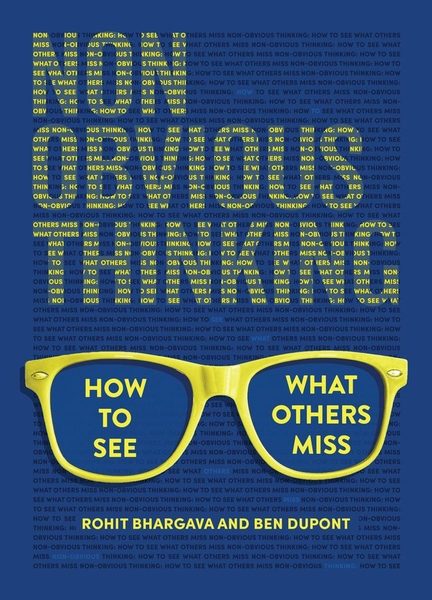
The five habits appear in every edition of the Non-Obvious series, and the practice of becoming a non-obvious thinker is the whole subject of Non-Obvious Thinking.
BRING THE FRAMEWORK TO YOUR STAGE
Rohit turns the five habits into a practical, highly actionable session that leaves any audience knowing exactly what to do next.

Want More Non-Obvious Ideas?
The Non-Obvious Insights Newsletter brings you the five or six most fascinating and overlooked stories of the week, with a quick take on why each one matters.
One email every Thursday. No spam, unsubscribe anytime.

Rohit Bhargava is on a mission to inspire more non-obvious thinking in the world.
© 2026 Rohit Bhargava. Washington DC.