
PUBLISHED IN NON-OBVIOUS THINKING
SIFT = SPACE + INSIGHTS + FOCUS + TWIST
The SIFT model is a framework introduced in Non-Obvious Thinking: How to See What Others Miss (published in 2024), co-authored by bestselling futurist Rohit Bhargava and venture capitalist Ben DuPont. Grounded in their combined research into the habits of truly original thinkers, the model distills non-obvious thinking into four sequential steps - Space, Insights, Focus, and Twist - that anyone can use to improve their mental flexibility and uncover ideas others overlook.
The name was a deliberate choice: beyond serving as an acronym, the word sift itself means to sort through noise and chaos to find what is most meaningful. Though still early in its life, the framework has quickly been featured across business media, podcasts, and book summaries as a practical, accessible roadmap for spotting hidden opportunities, and it builds on the decade-plus momentum of the #1 Wall Street Journal bestselling Non-Obvious series.
ABOUT THE FRAMEWORK (FROM THE BOOK)
Most bakers know that one of the secrets to making light airy cakes is sifting your dry ingredients. When you sift flour, for example, you eliminate lumps and incorporate air while removing impurities. The benefits of sifting offer a perfect metaphor to describe how you can start to think in more non-obvious ways too.
Aside from baking, the word sift has another meaning: to isolate that which is most valuable. It is this secondary meaning that led us to use the word as a memorable acronym for the method we will teach you in this book. Our goal is to help you become a non-obvious thinker. This starts with using the SIFT method.
THE 4 ELEMENTS OF THE SIFT FRAMEWORK
Four sequential steps, each with six techniques you can practice.
S
Before you can see what others miss, you must develop the mental flexibility to be open to new ideas.
Space is the warmup stretch that makes limber, non-obvious thinking possible. There are six techniques for creating it:
I
Insights go beyond describing the world as we see it on the surface and explain why it is the way it is. Discovering them usually starts by asking better questions.
The common starting point for insights is observation. Six techniques help you make your own and transform them into insights:
F
The art of curation is about discerning what is most meaningful.
Focus involves a process of distillation - deciding not just what to showcase, but what to leave out, so you can become a "speed understander" who quickly separates signal from noise. Six techniques sharpen it:
T
Defining the twist is about taking your thoughtful ideas in an unexpected direction.
The twist is where the magic happens, where non-obvious thinking becomes concrete and actionable - using your insights to create or imagine something new and original that no one else can or has before. Six techniques propel your thinking in new directions:
THE BOOK BEHIND THE FRAMEWORK
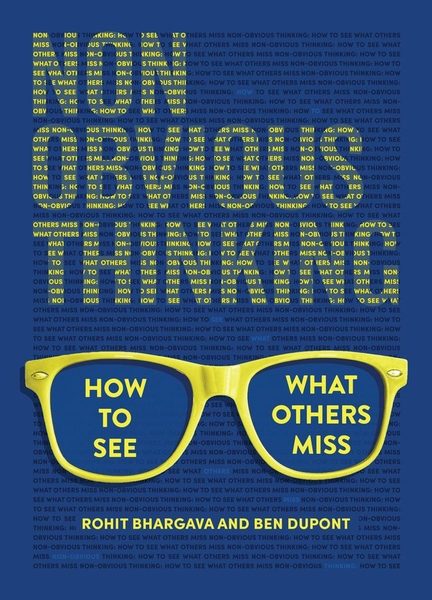
Non-Obvious Thinking: How to See What Others Miss is the book by Rohit Bhargava and Ben DuPont that introduced the SIFT method and its twenty-four techniques.
BRING THE FRAMEWORK TO YOUR STAGE
Rohit takes audiences behind the scenes of the SIFT method in his signature keynote on how anyone can learn to think in more non-obvious ways.

Want More Non-Obvious Ideas?
The Non-Obvious Insights Newsletter brings you the five or six most fascinating and overlooked stories of the week, with a quick take on why each one matters.
One email every Thursday. No spam, unsubscribe anytime.

Rohit Bhargava is on a mission to inspire more non-obvious thinking in the world.
© 2026 Rohit Bhargava. Washington DC.