THE NON-OBVIOUS SHOW · EPISODE 42
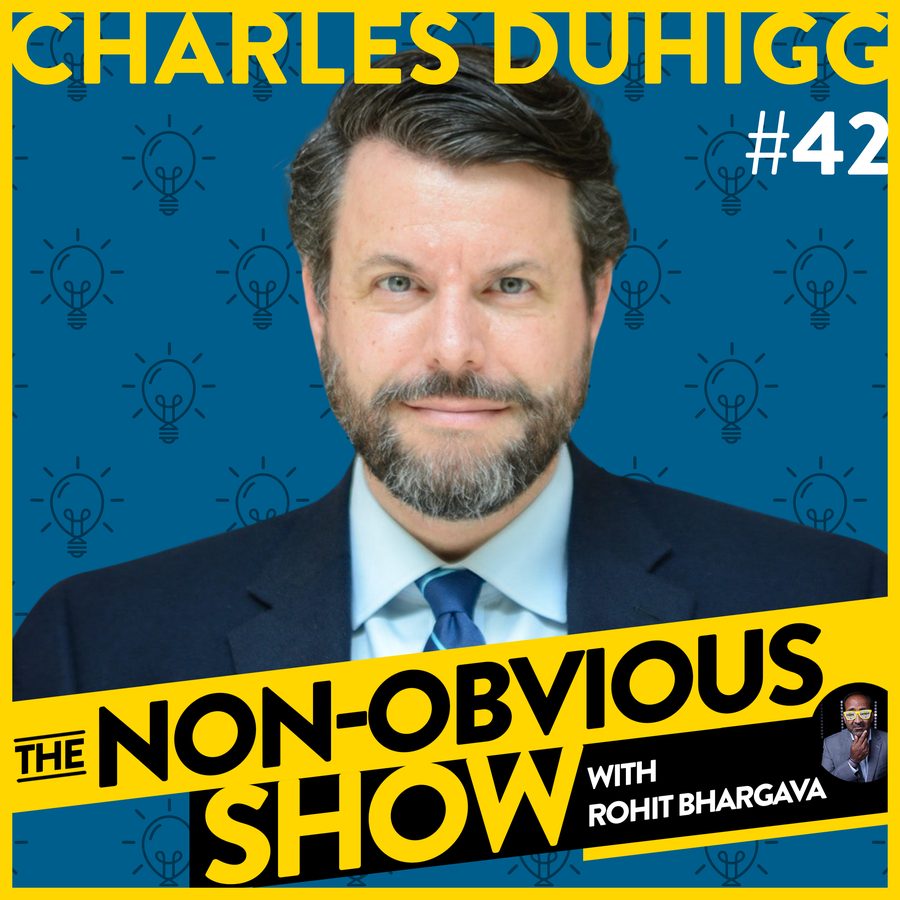
with Charles Duhigg
In this conversation, Charles Duhigg discusses his book 'Supercommunicators' and explores the essential skills that make someone an effective communicator. He emphasizes the importance of understanding different communication styles, the role of empathy, and the significance of deep questions in fostering authentic connections. Duhigg also highlights the impact of nonverbal communication, the challenges of online interactions, and the potential of AI in communication. Ultimately, he encourages everyone to recognize that communication is a skill that can be developed and improved over time.
Charles Duhigg opens by dismantling something most of us never question: that we know what a conversation is about. Brain scans say otherwise. Every discussion is actually three conversations happening at once (practical, emotional, social), and when two people aren't in the same one at the same moment, they literally cannot hear each other. It explains why a spouse offering a perfectly good solution can feel like a betrayal. From there it gets stranger. Roughly 80 percent of laughter comes in response to nothing funny at all, because laughter isn't about humor, it's a signal that you want to connect (and we're so good at detecting fake laughter that people can tell friends from strangers with 90 percent accuracy from a single second of audio). Duhigg also shares research on "high centrality participants," the people whose presence syncs a room's heart rates and brain activity, plus a finding that upends the be-yourself advice we all repeat: online, what earns trust isn't more authenticity, it's more politeness. One Wikipedia editor typing "please" cooled flame wars by half. If communication is a set of skills rather than a gift, the uncomfortable question is why so few of us have bothered to practice.
Author of Supercommunicators and The Power of Habit
Charles Duhigg is a journalist at The New Yorker and the author of The Power of Habit, Smarter Faster Better, and Supercommunicators. He won a 2013 Pulitzer Prize as part of a New York Times team and writes about behavior, habits, and communication.
charlesduhigg.com ↗
Want More Non-Obvious Ideas?
The Non-Obvious Insights Newsletter brings you the five or six most fascinating and overlooked stories of the week, with a quick take on why each one matters.
One email every Thursday. No spam, unsubscribe anytime.

Rohit Bhargava is on a mission to inspire more non-obvious thinking in the world.
© 2026 Rohit Bhargava. Washington DC.