








JANUARY 2, 2014|BRANDS & MARKETING
What Walgreen's Gets Right (And Wrong) About New Year's Resolution Marketing

 This is the week to start saving money. Or losing weight. Or spending more time with family. In other words, it is the week for starting on a new year's resolution. But there is a force outside your control that may help you either keep that resolution or break it ... and that force is marketing. This is the season where marketers in many industries start spending money trying to introduce new products and services designed to help you realize that happier and healthier self you have resolved to become.
Some are more authentic than others - yet putting the right marketing strategy together means big money in a time when customers are highly likely to be influenced to try and build new habits by trying new products and services. One marketer getting a lot of things right this week (and in the leadup to this week) is Walgreen's. Here are just a few of the good and bad lessons that I found valuable enough to share from studying the approach they have been taking in their latest marketing campaign:
This is the week to start saving money. Or losing weight. Or spending more time with family. In other words, it is the week for starting on a new year's resolution. But there is a force outside your control that may help you either keep that resolution or break it ... and that force is marketing. This is the season where marketers in many industries start spending money trying to introduce new products and services designed to help you realize that happier and healthier self you have resolved to become.
Some are more authentic than others - yet putting the right marketing strategy together means big money in a time when customers are highly likely to be influenced to try and build new habits by trying new products and services. One marketer getting a lot of things right this week (and in the leadup to this week) is Walgreen's. Here are just a few of the good and bad lessons that I found valuable enough to share from studying the approach they have been taking in their latest marketing campaign:
1. GOOD: Speak your consumer's language.
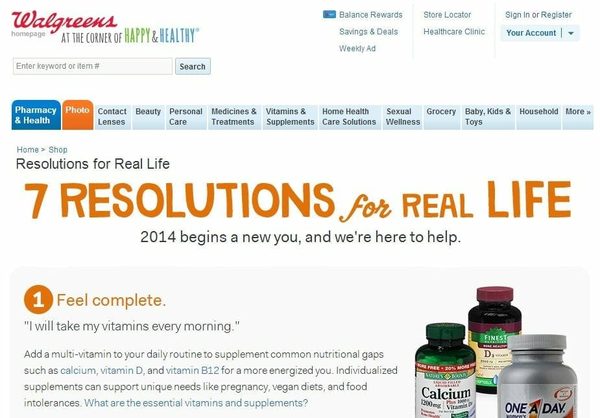
It is easy to assume that what people want is a cheerleader when it comes to new year's resolutions. The problem with that is that sometimes people set unreasonable goals for themselves, and cheerleading them towards inevitable failure isn't all that helpful. Instead of supporting those types of unattainable goals, Walgreen's marketing talks about "resolutions for real life" and promises "2014 begins a new you, and we're here to help." To bring this idea to life, they are running a wonderfully relatable ad featuring a woman who has set a goal of joining a "Tough Mudder-esque" training program that clearly seems too intense for her once she first arrives to attend it. Walgreen's consumers can see themselves in her - a fitness minded woman who wants to get healthier without joining a cultlike fitness tribe.2. GOOD: Make the connection to sales.
No matter what your resolution, chances are Walgreen's sells some assortment of products that can help you to keep it. On the landing page for their campaign, they spotlight seven of the most common health related resolutions and offer discounts on relevant products for each resolution. The end result is a very clear connection between the theme of their brand advertising, and the products they sell to help you keep those resolutions.3. BAD: No integration between channels.
Aside from not being able to find a version of the ad mentioned above on the YouTube page from the brand, the Facebook page for Walgreens has nearly 4 million fans but barely any mention of the new year's resolution campaign apart from a banner across the top of the page. Given the rich discussions people often have in real life around resolutions, you would think there could be some great conversations on the same topic on Facebook as well ... yet the majority of "conversations" on the page at the time of writing this post focused on free photo book offers and ways to get your prescriptions filled in the new year even if you don't have your new insurance card or plan ID number. The same lack of integration exists on Twitter - another major channel for the brand with more than 300,000 followers.4. BAD: Forgetting content marketing.
Beyond selling products to help people keep resolutions, why not collect or create content to help them do it as well? This was just one of the missed content marketing opportunities from this campaign. Another was continuing to promote what I often describe as "content graveyards" - places online where user experience goes to die. For Walgreens, these are their Google Plus and Foursquare profiles, which are still linked to and promoted on their main site, despite being largely abandoned and rarely updated or used. Despite what social media gurus often say, I believe there is no reason for a brand to invest in EVERY popular social media platform just because it happens to be popular. Choosing more strategically, and being particular about which platforms to avoid pays off far more dramatically in the long term.The Bottom Line:
Taking the good with the bad, the ultimate lesson that any marketer can learn from this Walgreen's campaign is just how much missed opportunity there is when brands forget to integrate a great TV ad with existing social platforms and audiences, and forget about the potential of content marketing to add more value for customers, and longer life to a campaign that will die far more quickly without it. Rohit Bhargava is the best selling author of five business books and founder of the Influential Marketing Group. His new year's resolution, as it seems to be every year, is to find a way to enjoy ice cream a little less frequently. So far, it hasn't worked.Related Posts
Book Rohit To Speak
Want to bring these ideas to your next event?
Rohit turns the thinking behind posts like this one into keynotes for audiences around the world, from Fortune 500 leadership teams to global industry conferences.
Learn More About Speaking
How It All Started
A Short Backstory Of This Blog
This is a blog about non-obvious ideas. Originally launched on the Typepad platform in 2005 as the Influential Marketing blog, the stories at first focused mainly on digital marketing while Rohit worked at Ogilvy Advertising. In 2015 Rohit officially rebranded to the Non-Obvious Insights Blog and published his WSJ bestseller Non-Obvious. For the past twenty one years, this blog has coined new terms, introduced future marketing practices and inspired the next generation of non-obvious thinkers and marketers.