








OCTOBER 2, 2014|STORYTELLING
5 Unexpected Storytelling Lessons From Beth Comstock

1. Develop "Story Archaeologists."
The brilliant thing about archaeologists is that they don't create history, they only discover it and help us find the meaning behind it. Similarly, there are so many stories that brands have already behind the way they make the things they make. If you can simply get better at finding them more consistently, you can often unlock a hidden treasure of stories that are waiting to be shared.2. Be A Participant, Not A Patron.
We expect a certain behaviour of our patrons - particularly when it comes to the Arts. The most obvious way for a brand to support a story is simply to sponsor it. Yet slapping a "Presented by" logo on a piece of storytelling produced by someone else is never the same as true storytelling. Instead, great storytelling requires you to be a participant and take a leap of faith to produce something.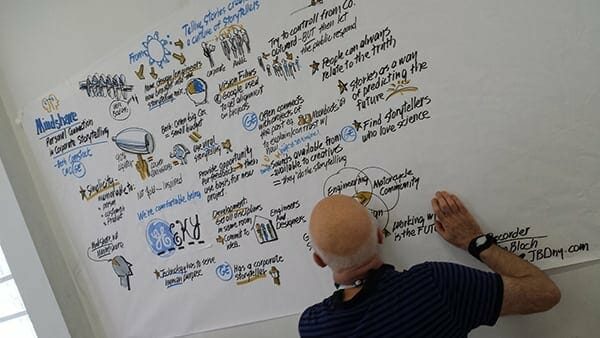
3. Make The Invisible Visible.
When you make big intimidating world shifting products like a jet engine - it can be easy for the individuals behind it to lose their sense of purpose. The end product is often invisible to them. Yet if you can bring that engineer to the first flight of the aircraft using that engine, or connect the designer of the new MRI machine to the cancer patient who ends up using it then you can make the impact of what they do come to life. Those situations create amazing stories because you make the invisible impact of their work visible.4. Hire People Who Are "Story Culture" Fits.
All storytellers are not created equal and the thing that separates them is passion. A great storyteller for GE must also love science and have curiosity. Without that combination of passion and curiosity, the beauty of the stories that GE might authentically tell could be lost. Great and visual storytelling isn't about hiring the hottest agency to reshape an image and to make a brand "cool." Instead, it's about embracing the inner geek and being true to yourself.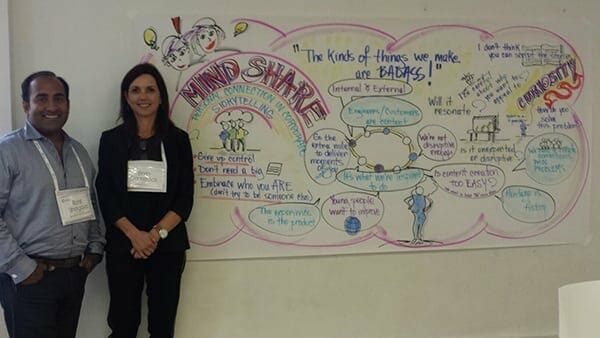
5. Create Wearable Meaning.
The thing that connects people is other people. We tend to think about meaning sometimes in the same way as logic. It has meaning as long as it makes sense. But they are not the same. When a story has true meaning, you connect with it so authentically that you would literally wear it. You would produce a t-shirt, put it on, and never take it off. Perhaps the biggest opportunity for corporate storytelling is to create and evangelize this type of meaning.The Bottom Line:
Of course, over the span of the day our conversation branched into many different categories and the participants (who I am in the process of curating to list here) offered many other useful ideas. Ultimately, as one participant put it, the key for corporate or brand storytellers is to move beyond history to heritage - because a history is just a list. A heritage is something you can be proud of - and that is worth finding a way to share because people will connect with it and learn from it. Even if they end up hearing it three times in a row. If you enjoyed this, you might also like my article on why "7 Reasons Why GE Is The Most Strategic Brand On Social Media" ...Rohit speaks on this topic. See his marketing keynote.
Book Rohit To Speak
Want to bring these ideas to your next event?
Rohit turns the thinking behind posts like this one into keynotes for audiences around the world, from Fortune 500 leadership teams to global industry conferences.
Learn More About Speaking
How It All Started
A Short Backstory Of This Blog
This is a blog about non-obvious ideas. Originally launched on the Typepad platform in 2005 as the Influential Marketing blog, the stories at first focused mainly on digital marketing while Rohit worked at Ogilvy Advertising. In 2015 Rohit officially rebranded to the Non-Obvious Insights Blog and published his WSJ bestseller Non-Obvious. For the past twenty one years, this blog has coined new terms, introduced future marketing practices and inspired the next generation of non-obvious thinkers and marketers.