








MARCH 15, 2013|SPEAKING & PRESENTING
5 Tragic Ways To Lose Your Audience When Presenting
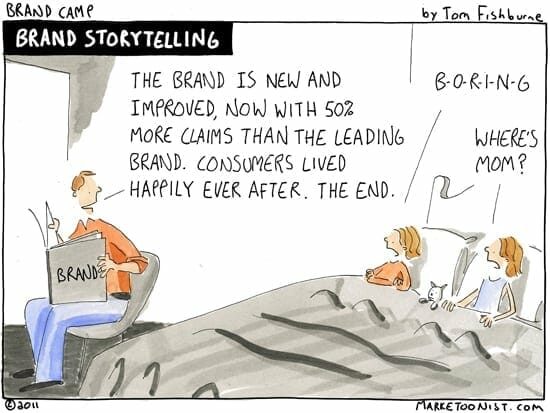
- Tell more stories.
- Use bigger fonts.
Mistake #1: Preamble Overdose
Tip: Don’t give an introduction that lasts forever. Just about every listeners least favourite words to hear at the start of a presentation are “let me tell you a little bit about myself.” Most of the time we have your bio already. Even if we don’t, the last thing we need is a five minute recitation of your bio. Wasting your audience’s time with that puts you in a credibility hole that is tough to dig yourself out of – so just skip the self serving bio … or at least move it to the end of your presentation.Mistake #2: Toxic Words
Tip: Avoid loaded buzzwords or stereotypes that show ignorance. Every industry and audience has hot button words or issues. Entrepreneurs who work from home hate the implication that they have “plenty of free time.” PR pros hate the assumption that all they do is write press releases. Most psychologists hate to be called “shrinks,” accountants don’t like to be “bean counters” and the list goes on and on. If you happen to be presenting to a group that has it’s own lingo (and most do) – always try to learn what words fit this category and what terms to avoid.Mistake #3: Personal Disconnection
Tip: Be careful sharing beliefs that can evoke passionate disagreement. It is a widely recognized that there is rarely an upside to including anything about religion or politics in a business setting (unless of course your audience is comprised of people from one setting or the other). What we sometimes forget is that there are other hot topics that can be just as polarizing. Puma and Adidas, for example are huge rivals. Mentioning one to the other will evoke a passionate response. The same goes for local or national sports teams. If the topic of your talk has nothing to do with these outside influences, you are always better off to keep them to yourself.Mistake #4: Experience Blindness
Tip: Find a way to empathize with those whose experience varies from yours. One of the easiest things to do is to look at the world of business and culture from your own lens. This may mean from a geographic point of view, but also include industry biases. The rules of what is permissible vary from industry to industry and across geographies as well. You don’t need to be an expert in how religion effects banking in Muslim countries, for example … but recognizing that your experience doesn’t always work everywhere in the world can go a long way to establishing credibility with a group that has a background unlike your own.Mistake #5: Demographic Mismatch
Tip: Gather information on the best tone, clothing and level of formality expected. Two of my least favourite words in the world are “business casual.” Why? Because this can mean many different things to many different groups. One time I spoke in front of a large group of managers from the travel industry on digital trends. I wore black jeans and a sports coat (my impression of business casual). Afterwards I got an angry email from an audience member who couldn’t believe I wasn’t wearing a suit with a tie. I’ve never been fond of dress codes – but now I always ask event organizers what “business casual” actually means. In modern business, chances are you will have plenty of opportunities to present yourself or your ideas in front of an audience. That chance may come in a job interview, or on stage in front of several hundred of your peers. No matter when that chance happens, your success may depend on your ability to make the most of it. Telling stories or practicing the basics like making eye contact and cutting the "ums and ahs" from your speaking will certainly help ... but if you really want to stand out, avoiding these five common mistakes will help. Along with reducing those bullet points, of course.Book Rohit To Speak
Want to bring these ideas to your next event?
Rohit turns the thinking behind posts like this one into keynotes for audiences around the world, from Fortune 500 leadership teams to global industry conferences.
Learn More About Speaking
How It All Started
A Short Backstory Of This Blog
This is a blog about non-obvious ideas. Originally launched on the Typepad platform in 2005 as the Influential Marketing blog, the stories at first focused mainly on digital marketing while Rohit worked at Ogilvy Advertising. In 2015 Rohit officially rebranded to the Non-Obvious Insights Blog and published his WSJ bestseller Non-Obvious. For the past twenty one years, this blog has coined new terms, introduced future marketing practices and inspired the next generation of non-obvious thinkers and marketers.