








SEPTEMBER 13, 2013|BRANDS & MARKETING
A Guide To Overcoming The Myth Of Content Marketing
 If there was a balloon made of KoolAid, I probably wouldn't be able to resist popping it.
KoolAid - aside from being a sugary drink that is deliciously bad for you, is also an analogy many of us use to describe a situation when everyone is blindly agreeing with an idea without questioning it. This type of balloon was in danger of flying high above the heads of all the attendees of the world's largest content marketing event this past week in Cleveland: Content Marketing World.
The event is an annual gathering place for anyone who believes in the power of content to improve marketing. On most days, I would probably fit that description too. I have often told clients that marketing works better when you are saying something substantial instead of just creating promotions. Yet spending two days sitting together in a room full of people all nodding in agreement to the same conclusion about the value of content marketing bothered me for some reason.
If there was a balloon made of KoolAid, I probably wouldn't be able to resist popping it.
KoolAid - aside from being a sugary drink that is deliciously bad for you, is also an analogy many of us use to describe a situation when everyone is blindly agreeing with an idea without questioning it. This type of balloon was in danger of flying high above the heads of all the attendees of the world's largest content marketing event this past week in Cleveland: Content Marketing World.
The event is an annual gathering place for anyone who believes in the power of content to improve marketing. On most days, I would probably fit that description too. I have often told clients that marketing works better when you are saying something substantial instead of just creating promotions. Yet spending two days sitting together in a room full of people all nodding in agreement to the same conclusion about the value of content marketing bothered me for some reason.
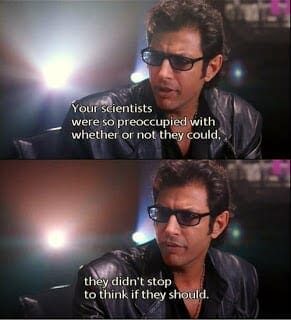 In fact, it kept reminding me of a moment of dialogue from the film Jurassic Park:
Malcolm: I'll tell you the problem with the scientific power that you're using here, it didn't require any discipline to attain it. You didn't earn the knowledge for yourselves, so you don't take any responsibility for it. Hammond: I don't think you're giving us our due credit. Our scientists have done things which nobody's ever done before ... Ian Malcolm: Yeah, yeah, but your scientists were so preoccupied with whether or not they could that they didn't stop to think if they should.The point is, there are a lot of people building on the idea of content marketing and blindly advocating that brands transform themselves into storytellers. So now we have a flood of people creating content for marketing without any training or skills on how to do it. In a recent post, content strategist Kevin Cain issued an open call for readers to share their content marketing gripe. The most popular theme in the comments, by far, was frustration with the lack of quality of content marketing. No wonder two of the most popular presentations on Slideshare right now are titled CRAP from Doug Kessler at Velocity Partners and Death To Bullshit from Brad Frost. Which all leads to a single important question. If content marketing is so important, why are brands so bad at it?
Why Your Brand Is Not A Storyteller
In the early days of social media, it was impossible to avoid a barrage of declarations from so-called experts and gurus that social media was going to change the future of your business. It seemed like an imperative, and as soon as that happened, the quality suffered because companies stopped focusing on strategy and started prioritizing execution. Today content marketing faces that same danger. The world already has content creators. They are called artists and filmmakers and writers. Not marketers. They suffer for their creations and go to extreme lengths to create real stories that strike emotional chords. But now every brand wants to be a storyteller. It doesn't work. This is the example I shared on stage during my session at Content Marketing World: James Cameron is a storyteller. He spends years making a single film. Once, after Titanic was made and already a commercial success, he learned that a team of astronomers had looked at some of his scenes from the sinking of the Titanic and noticed that the stars were in the wrong alignment. Cameron not only reviewed the comment, he went and re-shot those scenes to fix the position of the stars for the 3D and 10th Anniversary release of the film.
Would your brand go to those lengths for your "storytelling?" Probably not.
James Cameron is a storyteller. He spends years making a single film. Once, after Titanic was made and already a commercial success, he learned that a team of astronomers had looked at some of his scenes from the sinking of the Titanic and noticed that the stars were in the wrong alignment. Cameron not only reviewed the comment, he went and re-shot those scenes to fix the position of the stars for the 3D and 10th Anniversary release of the film.
Would your brand go to those lengths for your "storytelling?" Probably not.
3 Reasons Brands Have Trouble With Storytelling
The real problem with brands that set their sights upon becoming storytellers is that they generally lack three basic ingredients:- Talent - There is no guarantee that someone trained in marketing will be able to take those skills and transfer them over to any form of content creation. When responsibilities for content creation are assigned based on job titles, this tension of having people responsible for content creation that are not trained or skilled at it will continue.
- Time - Good content creation required dedicated time and effort, yet many of the resources assigned to create content on behalf of brands have it as an additional responsibility on top of other existing tasks, which causes the quality of their content to suffer.
- Topics - Artists create what they love, and sometimes it just doesn't make financial sense (hence the term "starving artist"). When it comes to the topics that brands want to create content around, they are too often locked down to topics that relate directly to products or services instead of thinking more broadly about industry trends or customer needs.
What Is Content Marketing?
Content Marketing Is … offering a substantial experience or piece of thinking that is useful, entertaining or solves a problem in a way that also helps to promote a product, service or belief.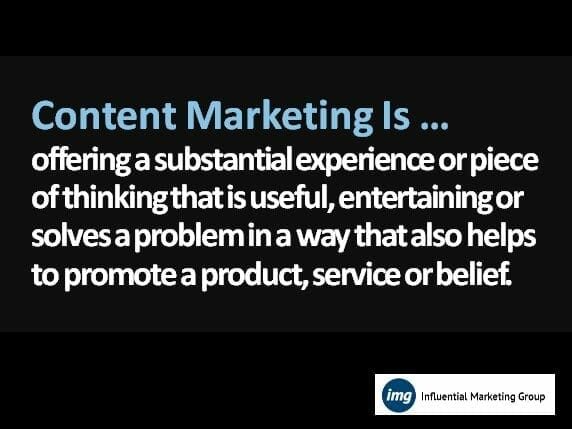
4 Techniques To Improve Your Content Marketing
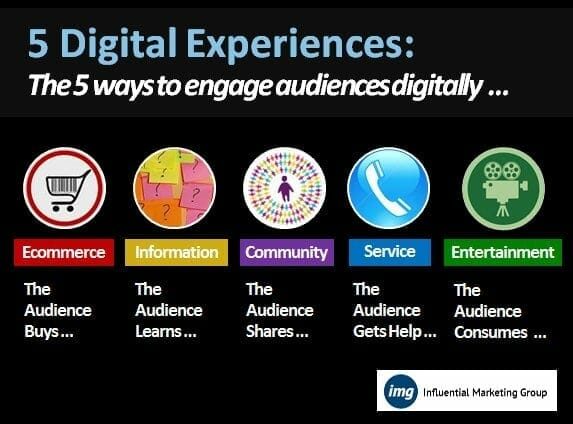
Notice that there is a word very intentionally missing from my definition of content marketing - storytelling. In putting together this recap, I realized that the best speakers that stood out at Content Marketing World were NOT the ones that told brands to become storytellers. There is plenty of advice like that. Instead, the the more valuable approaches took key principles of telling stories like (character development and appealing to emotions) and combined them with ways for marketing to be more substantial, answer key questions, and provide more utility. Based on the conversations there as well as some lessons taken from my own presentation I shared at the Tech Summit during the event, here are 4 techniques curated from the event to help you create great content to promote a brand or product. 1. Choose The Experience - One of the first steps in understanding how content can be used is to be clear about what type of experience you are creating. There are five types of digital experiences you can choose from - Ecommerce, Information, Community, Service, or Entertainment (outlined in the visual below). Once you have chose which one you will focus on, that will give you the right framework within which to build your content plan. 2. Own Your Category - The most tempting way to think about creating content is around the products or services that you offer. That's usually a mistake. Instead, the most valuable content often comes from focusing on an entire category. When glass manufacturing company Owens-Illinois uses content, for example, it is all about promoting the value of glass in life. By tailoring their message to become a champion of glass in life, they end up owning that category of glass online and promoting the value of their own products in the process.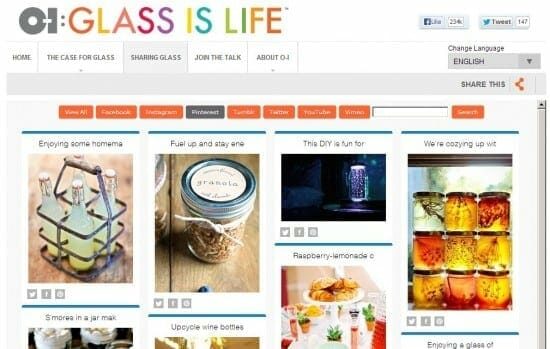 3. Know Your Audience's Quirks -
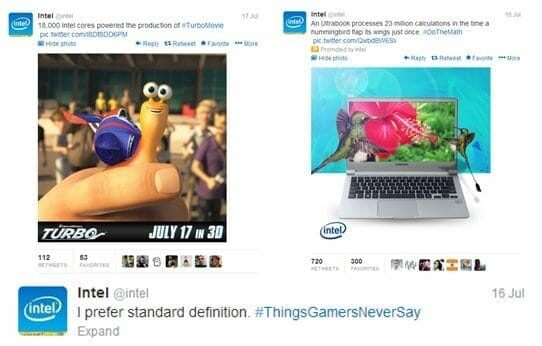
Whenever I need a go to example of a Facebook page as an example of one that really understands their audience, I use Intel. The brand has mastered the art of creating content that fits their tech-oriented audience's quirks, and as a result their continually get big levels of engagement and sharing because they understand their audience so well.
3. Know Your Audience's Quirks -
Whenever I need a go to example of a Facebook page as an example of one that really understands their audience, I use Intel. The brand has mastered the art of creating content that fits their tech-oriented audience's quirks, and as a result their continually get big levels of engagement and sharing because they understand their audience so well.
 4. Elevate Your Impact -
Sometimes the impact of your products or services aren't immediately clear to people. Content marketing can be the perfect way to bring some of those impacts to life. Through a combination of advertising and smart content marketing, technology company Agilent does exactly this through the use of visuals on their blog to share how their take their measurement tools and apply them to business.
4. Elevate Your Impact -
Sometimes the impact of your products or services aren't immediately clear to people. Content marketing can be the perfect way to bring some of those impacts to life. Through a combination of advertising and smart content marketing, technology company Agilent does exactly this through the use of visuals on their blog to share how their take their measurement tools and apply them to business.

Want to learn more about content marketing? See lots more content marketing resources at www.rohitbhargava.com/contentmarketing.
Rohit speaks on this topic. See his marketing keynote.
Book Rohit To Speak
Want to bring these ideas to your next event?
Rohit turns the thinking behind posts like this one into keynotes for audiences around the world, from Fortune 500 leadership teams to global industry conferences.
Learn More About Speaking
How It All Started
A Short Backstory Of This Blog
This is a blog about non-obvious ideas. Originally launched on the Typepad platform in 2005 as the Influential Marketing blog, the stories at first focused mainly on digital marketing while Rohit worked at Ogilvy Advertising. In 2015 Rohit officially rebranded to the Non-Obvious Insights Blog and published his WSJ bestseller Non-Obvious. For the past twenty one years, this blog has coined new terms, introduced future marketing practices and inspired the next generation of non-obvious thinkers and marketers.