








SEPTEMBER 7, 2010|SOCIAL MEDIA
How Algorithms Could Finally Revolutionize Social Media Marketing
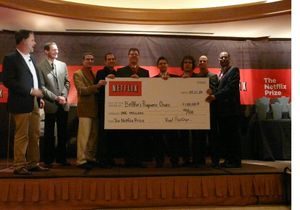 It is nearly the anniversary of the closing of a 3 year quest you may have heard of. The Netflix Prize was a $1m contest launched by the popular video rental service to improve their movie recommendation engine by a specific algorithmic percentage. The challenge was open to any and all mathematics and University teams and was finally awarded on September 21, 2009 to a team that submitted their winning entry just 24 minutes before the closing of the contest.
 What does a prize to solve a longstanding mathematical challenge mean for the future of marketing? More than you might think. Algorithms are at the heart of something that has long been promised by the social web but never quite delivered ... a truly personalized online experience. A social network, for example, that can learn your likes and dislikes so well that it can predict what you will want before you even look for it. Such a system and experience has long been visualized in science fiction, but our reality has been 20 million search results for any search and illogically served banner advertising that promises deals on airfare to Turkey when you actually just want a Thanksgiving recipe.
The solution to this challenge was always to build smarter algorithms, and one way to do that is by having learning systems where they get better and smarter the more you train them through your behaviours. Of course, this requires users to spend some time inputting data in order to make the systems better. Time was the barrier. Luckily, there are a few models for getting users past this barrier which mean that these algorithms now may finally be able to achieve what people have hoped they might for years:
- Integration with existing behaviours and platforms. If you are a Gmail user, you may have noticed their new Beta feature of the "Priority Inbox" which promises to help organize your inbox by learning which emails you might consider a priority. Using simple logic like highlighting those emails which you open and respond to most frequently, the system will learn over time based only on your hitting a button next to emails to indicate whether others like them should or should not be considered priorities. By integrating with a utility that a large number of people user already, this system makes it more likely that you will take the time to train the system to get usage out of it.
-
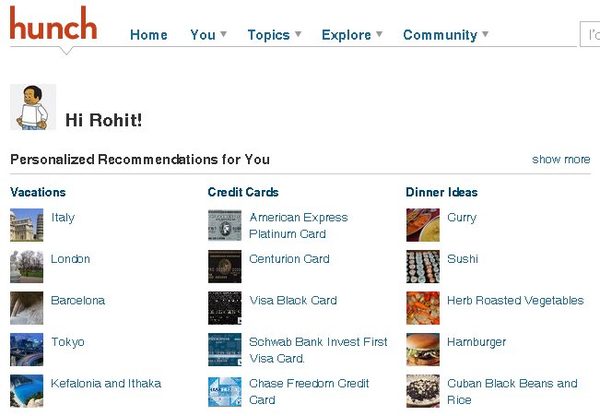
 Using gaming techniques to encourage engagement. Hunch is one of several increasingly popular sites that helps to personalize recommendations on things you may like. By having people answer questions in a quiz-like format, they create an engaging way for you to train the system through an activity that feels more like a game than a cold form that you check boxes in to describe yourself and your views. Then product recommendations with links are shared alongside your content and you can choose to click on them and follow through to purchase something.
When you have systems like this that make it acceptable and even commonplace for users to take the time to train their algorithms about themselves and their behaviours, then you start to see the vast possibilities for targeting and serving more relevant marketing to people online. This is not about finding your target audience for a product or service message. This is about being able to finally customize a message to what someone may want or respond to before they even click a link or type a term into a search engine.
Book Rohit To Speak
Want to bring these ideas to your next event?
Rohit turns the thinking behind posts like this one into keynotes for audiences around the world, from Fortune 500 leadership teams to global industry conferences.
Learn More About Speaking
How It All Started
A Short Backstory Of This Blog
This is a blog about non-obvious ideas. Originally launched on the Typepad platform in 2005 as the Influential Marketing blog, the stories at first focused mainly on digital marketing while Rohit worked at Ogilvy Advertising. In 2015 Rohit officially rebranded to the Non-Obvious Insights Blog and published his WSJ bestseller Non-Obvious. For the past twenty one years, this blog has coined new terms, introduced future marketing practices and inspired the next generation of non-obvious thinkers and marketers.