








NOVEMBER 27, 2013|RETAIL & ECOMMERCE
How To Be Kinder To Retail Workers This Holiday Season
1. Don't be a "flawyer."
"A flawyer is a customer who uses their uneducated misinterpretation of the law in an attempt to make a point or get what they want. If I run an ad that says my shoes are handmade by skilled craftsmen in Italy, but my shoes are really made on machines by children in Pakistan, I am guilty of false advertising. If, on the other hand, I run an ad that says I have toothbrushed on sale, but I sell out of those toothbrushes before everyone in the state has a chance to come and buy one, I am only guilty of poor planning or low expectations." Yes, sometimes products run out and not every store will have an in stock guarantee. But if you were trying to get tickets on a flight and it was sold out, you wouldn't ask the pilot to find two more seats or threaten to sue. Instead, you'd move on, get a different flight and get over it. Stores run out. It's ok. You will find some things you want and some things you won't. Get over it.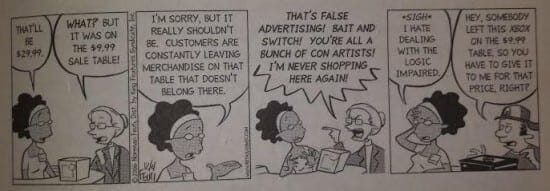
2. Accept the bullsh*t.
"Inane questions like 'How long will these crayons last?' should be answered in an authoritative fashion with whatever big, fat whopper you can come up with on the fly. [For example] - 'Under average use, you'll get two to three years out of a box, but heavy coloring can reduce that to as little as fourteen months.' I once had a customer ask me what kind of 'gription' a particular pair of boots had. Without hesitation, I told him that they had a gription rating of eight. He accepted that answer and seemed genuinely impressed with the rating." The fact is, many retail workers won't have all the answer about products they only learned about a few weeks ago. And they certainly won't have the answer if you choose to ask stupid questions. The smart workers, as Feuti suggest, will become adept at making stuff up on the spot. Sometimes it will be entertaining. Sometimes it will just be an answer that you know sounds wrong. If you get one like that, accept it and move on. Maybe ask someone else. There is no upside for them to withhold information - so persisting is like asking a tourist for dinner spot recommendations in an unfamiliar city. No matter which words you choose, you probably won't get a great answer because they just don't have the information you are asking for.3. Skip the philosophy.
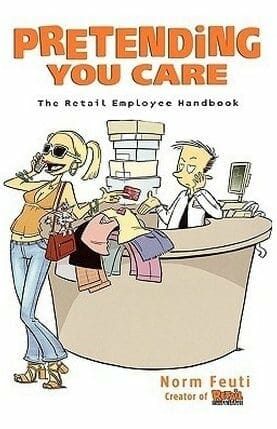
"Philosophers are customers who try to bestow some hackneyed wisdom upon you when they catch you in a bad mood. 'If you don't like your job, you should get a different one.' You can quickly teach this kind of philosopher to mind his own business by confessing that it's really some made-up personal problem that's making you irritable--the more uncomfortable the better. [For example] - 'sigh, it's not really the job that's getting me down. I got my girlfriend's mom pregnant and I just don't know how to break it to her. What do you think I should do?' Not only will it send them packing, but the discomfort you cause them will make you feel better." If there is a sad fact about retail, it's that you'll rarely meet a worker with the same wit and humor as Norm Feuti (who spent many years as a retail worker getting inspired to create his cartoon and write the book). Still, the lessons from his book hold true - no one wants to hear about your amazing philosophy of life in a retail environment. Least of all when it's busy and there are lots of customers.The Bottom Line
It was several years ago that I first read Pretending You Care, but it changed the way I thought about being a consumer. The day before Black Friday seems like the perfect time to bring back some of those lessons. Of course, you might just forget about all this when staring at the last of the insanely priced HDTVs left on the shelf. Just remember being kind always matters - even if you don't believe in the big guy who tracks when you're naughty or nice anymore.Related Posts
Book Rohit To Speak
Want to bring these ideas to your next event?
Rohit turns the thinking behind posts like this one into keynotes for audiences around the world, from Fortune 500 leadership teams to global industry conferences.
Learn More About Speaking
How It All Started
A Short Backstory Of This Blog
This is a blog about non-obvious ideas. Originally launched on the Typepad platform in 2005 as the Influential Marketing blog, the stories at first focused mainly on digital marketing while Rohit worked at Ogilvy Advertising. In 2015 Rohit officially rebranded to the Non-Obvious Insights Blog and published his WSJ bestseller Non-Obvious. For the past twenty one years, this blog has coined new terms, introduced future marketing practices and inspired the next generation of non-obvious thinkers and marketers.