








DECEMBER 2, 2022|GOVERNMENT & POLITICS
San Francisco Votes To Give Police Robots a License To Kill
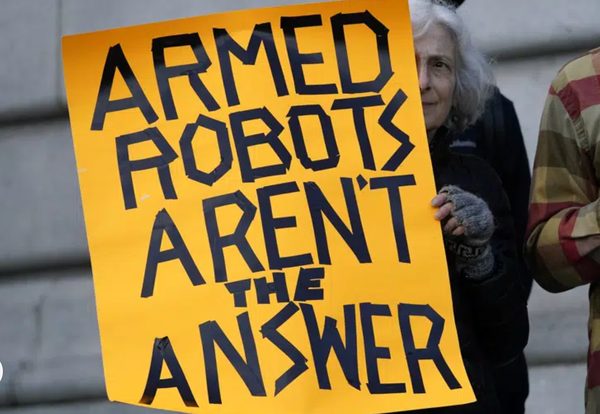
Isaac Asimov’s rules of robotics are pretty clear. “A robot may not injure a human being or, through inaction, allow a human being to come to harm.” What if the first two elements of that rule come into conflict? San Francisco’s Board of Supervisors has approved a policy to allow the city’s police to administer lethal force through remotely piloted robots. This usage is restricted to times “when risk of loss of life to members of the public or officers is imminent and officers cannot subdue the threat after using alternative force options or de-escalation tactics.”
This is the sort of discussion that local officials (and the rest of us citizens as well) will increasingly need to have as we decide how much authority to offer to the technology around us. In this debate, critics are already arguing that it offers police too much control to execute citizens without due process. Advocates, on the other hand, argue that provisions for this type of usage could be warranted in situations like a Dallas, Texas standoff where a robot with a bomb was used to kill a sniper who had already killed five police officers. Like most questions of this scale, there isn’t an easy answer.
Related Posts
Book Rohit To Speak
Want to bring these ideas to your next event?
Rohit turns the thinking behind posts like this one into keynotes for audiences around the world, from Fortune 500 leadership teams to global industry conferences.
Learn More About Speaking
How It All Started
A Short Backstory Of This Blog
This is a blog about non-obvious ideas. Originally launched on the Typepad platform in 2005 as the Influential Marketing blog, the stories at first focused mainly on digital marketing while Rohit worked at Ogilvy Advertising. In 2015 Rohit officially rebranded to the Non-Obvious Insights Blog and published his WSJ bestseller Non-Obvious. For the past twenty one years, this blog has coined new terms, introduced future marketing practices and inspired the next generation of non-obvious thinkers and marketers.