







FEBRUARY 24, 2014|SPORTS & OLYMPICS
The Best And Worst Of 2014 Sochi Olympics Marketing Strategy
Best Integrated Marketing Strategy (Brand) - NBC
 In terms of sheer frequency of promotional opportunities - NBC paid for that right thanks to their exclusive coverage of the Olympic Games in the US. The coverage itself was widely praised - but more importantly from a marketing perspective, throughout the Games they found so many ways to promote their other programming that it was easy to lose count. Jay Leno said farewell to the Late Show and NBC introduced Jimmy Fallon as the new host to wide acclaim. The network squeezed a brilliant trailer for its popular singing competition show The Voice that featured superstar judges Usher, Shakira, Adam Levine and Blake Shelton singing each other's songs. And their choice to pair former skating champions Johnny Weir and Tara Lipinsky together as figure skating guest commentators proved so popular, the duo may even get their own TV series.
Best Integrated Marketing Strategy (Country) - Canada
Aside from winning lots of medals, there were no shortage of stories about how Team Canada seemed to be winning the entire Olympics. From feel good stories of Canadians helping other teams in need, to the unspeakably brilliant marketing ploy of creating a beer fridge that could only be opened with a Canadian passport - the country was on fire in the global media. Russian President Vladimir Putin partied with Canadians, their team won the esteemed Hockey Gold medal (Men's AND Women's) and before the Games even started, The Canadian Institute of Diversity and Inclusion capitalized on all the media attention around Russia's anti-gay political culture by releasing a satirical video about how "the Games have always been a little gay." (see below) And just when you thought the Canadians couldn't get any more mileage out of winning the Olympics ... they released a powerful new video promoting their Paralympic team and getting ready for the next chapter of the Olympics. (see below)Best Launch Marketing Strategy - Cover Girl
It may seem unfair that one of the best strategies of the Olympics came from a brand that only debuted their latest campaign during the Closing Ceremonies - but Cover Girl's latest #GirlsCan campaign was the perfect combination of a campaign that tapped a cultural trend (see Trend #15 in my recently released 2014 Trend Report) and leveraged the brand's announcement of several new Olympic athlete Cover Girls, including figure skaters Gracie Gold (USA) and Tessa Virtue (Canada). The new TV spot featured celebrities like Ellen DeGeneres and Queen Latifah talking about all the times in their lives when they heard "girls can't" - and all the ways they overcame the barriers. Best of all, the spot built on the heritage of the brand thanks to a closing line where DeGeneres uses Cover Girl's longtime tagline to challenge girls to "make the world a little more easy, breezy and beautiful." The campaign connects with plenty of online digital resources and seems poised to create lots of positive engagement for the brand in the coming weeks and months.Best Copywriting Strategy - GE
In a business as hopelessly complex as GE's, it may seem impossible to imagine that the many things GE does could ever be depicted in a television spot that makes any sense. Thankfully, the brand did just that in a perfect way by sharing a child's voice talking about her mom working at GE and all the things that she works on - ie "my mom makes trains that are friends with trees." The ad was one of the most intelligently simplified messages that you will ever find in marketing ... and my easy pick for the best copywriting and messaging strategy of any ad launched during the Olympics.Worst Marketing Strategy - McDonald's
You could easily argue that the longtime sponsorship of the Olympics has been a questionable one for McDonald's. Yet I do remember spending some time in the athlete's village when I was in the Beijing Games and several athletes mentioned how having a McDonald's in the village offered a welcome treat from the days of training and a nice celebration after their respective events were over. Rather than focus on this feel good moment, though, the brand uses a tired cliche of athlete biting their medals as a stretched metaphor to suggest that YOU at home could support the athletes by biting into your own 20 piece chicken McNuggets for $5. In a moment when people are hungry for celebrating the human spirit, McDonald's decided to try and sell some McNuggets. Consumers expect more from the brand than that.Best Real Time Strategy - Liberty Mutual
Sponsoring any sports event can be tricky when real time events create unpredictable moments. While VISA earned some praise for their real time posting strategy on Facebook, the real winner was Liberty Mutual and their RISE program. The entire campaign was focused on the stories of how athletes worked to overcome adversity and (literally) RISE above their setbacks. Rather than just telling these stories through TV spots, though, the brand produced a series of films featuring popular athletes like JR Celski and Picabo Street. The stories were filmed well in advance, and most brands would rest on that content and look at the Olympics as a moment for distribution and promotion. Instead the brand took the stories of skier Heidi Kloser, who was injured in a run before the Opening Ceremonies and feared if she didn't walk in the Opening Ceremonies, she couldn't be considered an Olympian. She did - and telling her story in an ad that was clearly produced after the start of the Games resonated with audiences because it was transparent and closer to real time.Best Product Integration Strategy - BMW
The ads featuring BMW technology in the bobsleds used by the US team had so much buzz before the Olympics, it was covered in a NY Times article that I provided a quote for. Thankfully for BMW, the technology paid off and presumably helped the Americans win several medals. When an integration goes smoothly like that, it helps everyone. In this case, that's exactly what happened.Best Recurring Olympic Strategy - P&G
The brand struck Olympic Gold with their inspired "Proud Sponsor of Moms" campaign launched in previous Olympic Games. This year saw a continuation of that campaign with similarly emotional ads that told the story perfectly and were highly likely to connect with the brand's audience of moms and connect with them. The best part of about the campaign? They prefilmed so many combinations of athletes saying thanks to their moms, including Gold AND Silver medal winning ice dancing pairs Tessa Virtue and Scott Moir from Canada and their rivals, Gold medal winners Meryl Davis and Charlie White, that no matter who won or lost - the brand was sure to have a relevant story of athletes and their moms to air.Worst Missed Olympic Marketing Ambush Opportunity - Home Depot
 In contrast to all the celebration of moms and their roles in helping Olympic athletes become who they were, the dads were mostly forgotten. One Dad who did get some attention, though, was Brett West - who built his son Tucker a luge track in his backyard. There were several other stories from Olympic athletes of how their dads helped them train by building some type of ramp or other apparatus to help them practice everything from skiing to snowboarding. And where did most of these dads get all their materials from? Home Depot, of course. Clearly the brand made a financial choice to walk away from the Olympics back in 2009, yet there was a clear opportunity in perhaps sponsoring some of these dads who go above and beyond to support their kids Olympic dreams in a way that could have given them a perfect opportunity to get a little ambush marketing value out of the Olympics despite giving up their spot as an official sponsor.
Worst Creative Strategy - Cadillac
Thanks to the short gap between the Super Bowl and the Olympics, there is predictable temptation to reuse the same strategy for both large events. The thing that is easy to forget is that the audience watching both sports may not be exactly the same. Case in point was the pro-American ad that Cadillac launched during the Winter Olympics. The tone of the ad may have felt perfectly in place at the Super Bowl, which featured several US-centric ads with varying degrees of success. This ad, though, sparked a controversy because some felt the message was not in the spirit of the Olympics - and perhaps just plain wrong as well.Worst Decline In Creative Strategy - Apple
For years, Apple's marketing was something that other brands looked at with envy. It only took the first three seconds of an ad and you could tell it was for an Apple product. The brand's latest ad is a 90 second spot that looks and feels exactly like one of Microsoft's new ads focusing on how their technology impacts the world by letting you do great things. The ad is a sad symbol of how far the marketing strategy of Apple has fallen since the days when Steve Jobs controlled it with an iron fist. Every moment of that ad is something Jobs likely would have hated. Unfortunately, it seems there's no one left to kill bad ideas like this anymore ...Worst Use Of Sponsorship - Ralph Lauren Polo
It is one thing to pay a large sum of money for the rights to clothe every American athlete during the opening ceremonies. It is another to give them what may be possibly the ugliest national team sweater ever created. While some critics seemed to appreciate the "bold" outfit - to anyone American who has traveled abroad and had to contend with the "Ugly American" stereotype ... this sweater pretty much just brought that to life. Even the sad fact that the sweaters have been miraculously selling online (perhaps to those getting an early start on their wardrobe for holiday ugly sweater parties) - the design did nothing to promote Ralph Lauren as a brand anyone who isn't already a customer should consider looking at. Even worse, it may have helped to put a brand that relies on its appeal to a wide population into the undesirable category of a fashion brand that makes clothes to gawk at on a runway, but never to buy in real life.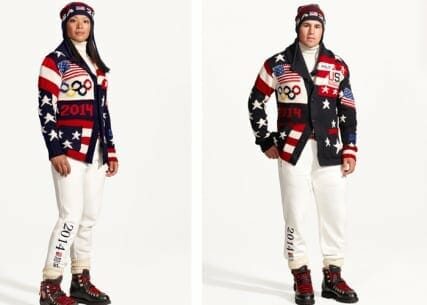 NOTE - To watch a playlist of all the ads featured in this post, as well as several that were not covered in this article - you can visit the full Best and Worst of 2014 Sochi Olympic Marketing Playlist on YouTube.
About This Recap - This analysis of Olympic Marketing was prepared after taking notes and reviewing many different campaigns throughout the 2014 Sochi Olympic Games. It is the latest installment in a "Best And Worst Marketing Strategy" series from large sporting events that have been published before on this blog. To read previous editions, you can click any of the links below:
NOTE - To watch a playlist of all the ads featured in this post, as well as several that were not covered in this article - you can visit the full Best and Worst of 2014 Sochi Olympic Marketing Playlist on YouTube.
About This Recap - This analysis of Olympic Marketing was prepared after taking notes and reviewing many different campaigns throughout the 2014 Sochi Olympic Games. It is the latest installment in a "Best And Worst Marketing Strategy" series from large sporting events that have been published before on this blog. To read previous editions, you can click any of the links below:
Related Posts
Book Rohit To Speak
Want to bring these ideas to your next event?
Rohit turns the thinking behind posts like this one into keynotes for audiences around the world, from Fortune 500 leadership teams to global industry conferences.
Learn More About Speaking
How It All Started
A Short Backstory Of This Blog
This is a blog about non-obvious ideas. Originally launched on the Typepad platform in 2005 as the Influential Marketing blog, the stories at first focused mainly on digital marketing while Rohit worked at Ogilvy Advertising. In 2015 Rohit officially rebranded to the Non-Obvious Insights Blog and published his WSJ bestseller Non-Obvious. For the past twenty one years, this blog has coined new terms, introduced future marketing practices and inspired the next generation of non-obvious thinkers and marketers.