






MAY 30, 2025|MEDIA & JOURNALISM
The Campaign to Stop the Spread of Fake Media – PSAi

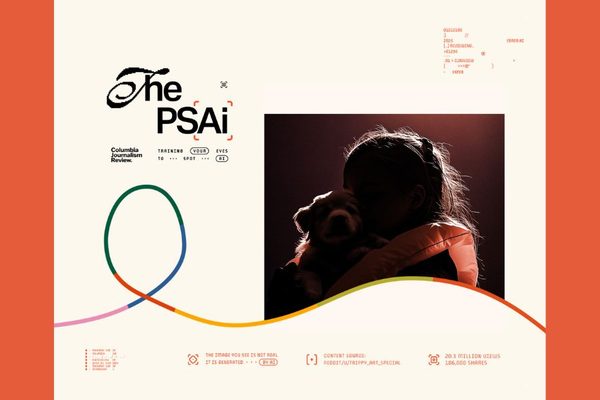
The best strategy to fight back against the rise of fake media is prioritizing media literacy training for adults and kids. This past week to support this effort, the team at Columbia Journalism Review launched their PSAi website and program aimed at "training your eye to spot AI." The platform features a catchy video and song to promote the key tactics and tips they share for how to get better at spotting AI-manipulated images:
- Check for hands and fingers - AI often struggles with realistic hand placement and finger details, so examine these closely.
- Look at facial features - Check for asymmetry in facial features, odd eye placement, unnatural skin textures, or expressions that don't match the situation.
- Scan the background - Look for blurry or pixelated background elements, objects that don't fit the scene, or strange color gradients.
- Spot contextual errors - Pay attention to details that might not make sense within the image, like text that is illegible or objects that don't belong.
- Look for distorted logos or text - Look for minor details that appear off, like an odd number of fingers, misplaced objects, or strange proportions.
Some of these tips are obviously based on modern AI tools that still struggle to depict text or facial features accurately. Those limitations are likely to be fixed given the rate of improvement of AI platforms. Tip #4 about "spotting contextual errors" strikes me as the most important. There is no replacement for being thoughtful about the images we see and asking ourselves whether they make sense. Would the person depicted reasonably be doing the thing shown? It's not a foolproof question but it certainly could help if more of us asked it more often.
Book Rohit To Speak
Want to bring these ideas to your next event?
Rohit turns the thinking behind posts like this one into keynotes for audiences around the world, from Fortune 500 leadership teams to global industry conferences.
Learn More About Speaking
How It All Started
A Short Backstory Of This Blog
This is a blog about non-obvious ideas. Originally launched on the Typepad platform in 2005 as the Influential Marketing blog, the stories at first focused mainly on digital marketing while Rohit worked at Ogilvy Advertising. In 2015 Rohit officially rebranded to the Non-Obvious Insights Blog and published his WSJ bestseller Non-Obvious. For the past twenty one years, this blog has coined new terms, introduced future marketing practices and inspired the next generation of non-obvious thinkers and marketers.