








NOVEMBER 6, 2007|ENVIRONMENT + SUSTAINABILITY
The Great Recycling Myth and Your Marketing Data
With all of the attention on global warming and what each of us could do, there is an interesting paradox that you may not realize which is happening right under your nose at work. I was reminded of it again as I came across a Dilbert comic that sums up the issue in three short panels as only Scott Adams can do:
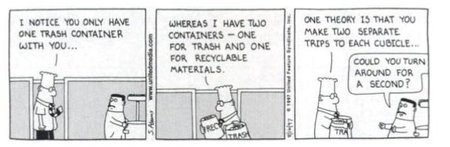 The short story is that what you think is recycling at work is very often a myth. You may be diligently separating your garbage from your paper recyling, but at the end of the night when the cleaners come through your office, they just have one big trash can and it all goes into the same place. A cousin of mine who lives in Austin had the same situation and it bothered her so much, she agreed to take the paper recycling out herself every week and now people pile it outside of her office. Am I bringing this up to tell you to launch your own internal paper recycling army like she did? Not really (unless that's what you want to do, of course).
If you think about it, the relationship between recycling and trash is exactly how you need to treat your marketing data online, by separating the useful from the not useful, instead of throwing it into the same database all together. The irony is, in many cases your customers are separating this data for you (like the hapless cubicle workers) ... it's just up to you to keep it separate when you record it. Less useful demographics in this model would be all the things you are used to capturing (gender, age, location, HHI, etc.). Instead, you would focus on three different things:
- Behaviour - What are they doing on your site and how are they searching or browsing? What is the progression of pages or areas they viewed? Where did they go before and after visiting your site? How often did they return? How long did they spend on your site? What type of marketing do they respond to?
- Conversation - What have they asked you about online or through email? Did they call in and what did they ask about? Have they written about you on a forum or a blog and what did they say?
- History - What have they purchased from you before? How often do they come back to purchase or browse your site? What sort of items do they buy and who do they buy them for (if not for themselves)?
On a very basic level, these are the three elements of your marketing data worth recycling. You probably noticed that most have nothing to do with what gender someone is or where they live. What would happen if you just focused on these and tossed the rest of the data you are used to focusing on?
Related Post: Thinking Outside the Demographic
Related Posts
Book Rohit To Speak
Want to bring these ideas to your next event?
Rohit turns the thinking behind posts like this one into keynotes for audiences around the world, from Fortune 500 leadership teams to global industry conferences.
Learn More About Speaking
How It All Started
A Short Backstory Of This Blog
This is a blog about non-obvious ideas. Originally launched on the Typepad platform in 2005 as the Influential Marketing blog, the stories at first focused mainly on digital marketing while Rohit worked at Ogilvy Advertising. In 2015 Rohit officially rebranded to the Non-Obvious Insights Blog and published his WSJ bestseller Non-Obvious. For the past twenty one years, this blog has coined new terms, introduced future marketing practices and inspired the next generation of non-obvious thinkers and marketers.