








JUNE 26, 2025|DIVERSITY
The Perfect Astronaut of the Future Is Changing—Here's Why It Matters
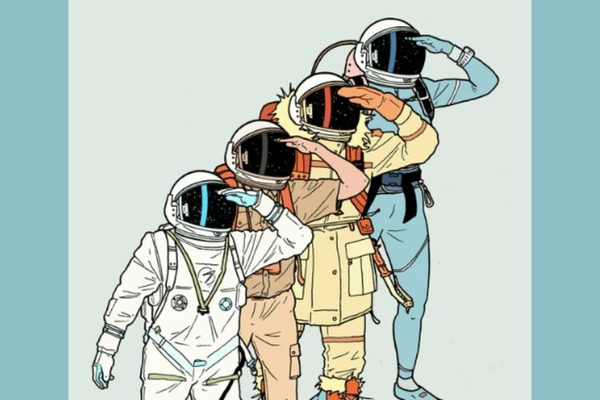
In the late 1950s, NASA recruited 11 men aged 25-48 for a unique experiment that has today been mostly forgotten. The participants, known to history mainly as the "Gallaudet Eleven" had one important factor in common: they were all deaf. For most of the next decade, scientists "measured the volunteers’ non-reaction to motion sickness on both a physiological and psychological level," aiming to improve their understanding of how the body’s senses work when the inner ear doesn't receive gravitational cues.
In many ways, these differently gifted participants would have made ideal astronauts. People with various ostomies also have been proposed as ideal astronauts because they already have a solution for the tricky problem of dealing with bodily functions in space. The political pressures of the time, however, led to the program being built mainly with rugged former U.S. Air Force pilots instead. The criteria for being an astronaut in those times was heavily influenced by the media frenzy around them. As the priorities for NASA now shift to sending a manned spaceflight to Mars—the criteria for astronauts of the future may once again be shifting:
"If humans are to even set foot on another planet, Earth might need to send a different type of astronaut. And the most promising candidates might be people whom NASA has long looked to for inspiration, but rarely as hires—outdoor explorers used to navigating challenging and unknown environments, in small groups and relative isolation."
Beyond space travel, this story is a good reminder that what worked in the past may not be the right model in the future. Just as the perfect astronaut for the future may require very different skills ... many other roles we see one way today may soon undergo similar shifts.
Related Posts
Book Rohit To Speak
Want to bring these ideas to your next event?
Rohit turns the thinking behind posts like this one into keynotes for audiences around the world, from Fortune 500 leadership teams to global industry conferences.
Learn More About Speaking
How It All Started
A Short Backstory Of This Blog
This is a blog about non-obvious ideas. Originally launched on the Typepad platform in 2005 as the Influential Marketing blog, the stories at first focused mainly on digital marketing while Rohit worked at Ogilvy Advertising. In 2015 Rohit officially rebranded to the Non-Obvious Insights Blog and published his WSJ bestseller Non-Obvious. For the past twenty one years, this blog has coined new terms, introduced future marketing practices and inspired the next generation of non-obvious thinkers and marketers.