








MAY 24, 2022|STRATEGY & PLANNING
The Problem With Google’s Strategy For Everything
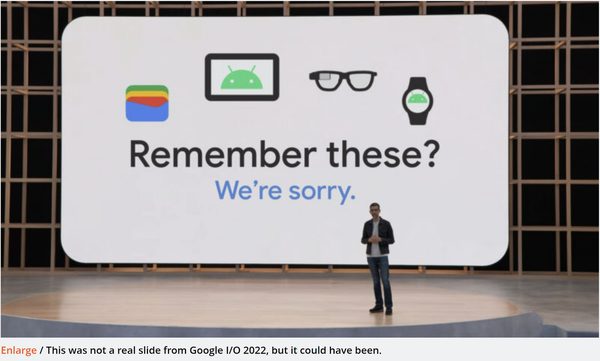
The best recap I read after Google’s big I/O conference came from Ars Technica, which pointed out the obvious flaw in Google’s vision this way: “by my count, ‘resurrecting the past’ accounted for around half of the company’s major announcements. In all of these cases, Google would be in a much stronger position if it had committed to a long-term plan and continuously iterated on that plan. Unfortunately, the company doesn’t have that kind of top-down direction. Instead, for most of the resurrected products, Google is trying to catch up to competitors after years of standing still.”
In contrast, Amazon continues to maintain a strong long term vision and execute on that vision to continually win and shape entire industries. Despite his character flaws, Jeff Bezos is a relentless strategic thinker and his long term mindset has undeniably paid off for Amazon. So what should Google do differently? In a word: persevere.
The biggest problem Google faces is giving up on good ideas too early and moving on to new initiatives too easily. Unfortunately, “all this work makes it seem like Google is trying to get back what it threw away,” instead of capitalizing on the prescient brilliance of their people who often seem to see the future before anyone else, and then seem to abandon it before they really know what they discovered.
Rohit speaks on this topic. See his innovation keynote.
Book Rohit To Speak
Want to bring these ideas to your next event?
Rohit turns the thinking behind posts like this one into keynotes for audiences around the world, from Fortune 500 leadership teams to global industry conferences.
Learn More About Speaking
How It All Started
A Short Backstory Of This Blog
This is a blog about non-obvious ideas. Originally launched on the Typepad platform in 2005 as the Influential Marketing blog, the stories at first focused mainly on digital marketing while Rohit worked at Ogilvy Advertising. In 2015 Rohit officially rebranded to the Non-Obvious Insights Blog and published his WSJ bestseller Non-Obvious. For the past twenty one years, this blog has coined new terms, introduced future marketing practices and inspired the next generation of non-obvious thinkers and marketers.