







DECEMBER 30, 2025|ARTIFICIAL INTELLIGENCE
The Quantified Uselessness of the AI-Generated Year in Review
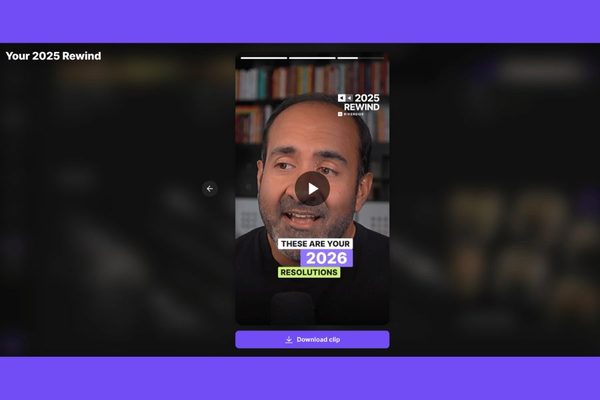
There's a special kind of uselessness amplified by AI that's probably surrounding you right now: the year in review. The idea wasn't a bad one. After users spend all year feeding their content onto a platform, it makes sense for that platform to try and offer back and recap of "greatest hits," right? Unfortunately, the results sometimes turn out to be a celebratory pile of generative slop without meaning or thoughtfulness.
Here's an example. Riverside, the platform I use to record my podcast, produced a "year in review" for me that showcased the "top word" used by my guests (who are usually authors): the word was "book." Then their AI clipped together a bunch of segments of my guests saying some version of "ummm" ... and the whole thing came together with the AI's observation that "you like to make people laugh" because it noticed people laughing in video clips.

When Merriam-Webster named "slop" the word of the year, this is pretty much exactly what they were talking about. There's a growing temptation to create some sort of performative data roundup because it's available at the touch of a button or tweak of an algorithm. That doesn't make it good.
Consider instead how Spotify has been doing their year in review. Every time I get those, I see useful insights about my listening trends along with an unspoken reminder that I need to broaden the musical diversity of my playlists. As a result of those recaps, I do something different. That makes it meaningful.
Although, the Riverside recap did make me more conscious of the times that I have said "umm" during interviews, so I suppose that's something.
Book Rohit To Speak
Want to bring these ideas to your next event?
Rohit turns the thinking behind posts like this one into keynotes for audiences around the world, from Fortune 500 leadership teams to global industry conferences.
Learn More About Speaking
How It All Started
A Short Backstory Of This Blog
This is a blog about non-obvious ideas. Originally launched on the Typepad platform in 2005 as the Influential Marketing blog, the stories at first focused mainly on digital marketing while Rohit worked at Ogilvy Advertising. In 2015 Rohit officially rebranded to the Non-Obvious Insights Blog and published his WSJ bestseller Non-Obvious. For the past twenty one years, this blog has coined new terms, introduced future marketing practices and inspired the next generation of non-obvious thinkers and marketers.