








FEBRUARY 28, 2025|ECONOMICS & MONEY
The Truth About the Penny

No one wants one. People will walk past a penny lying on the street, a real-life demonstration of just how worthless it is for most of us. For many, it’s also a perfect example of governmental inefficiency since it’s widely known that the cost to produce each one is higher than the actual value of the penny itself. It is estimated that the U.S. government loses 2.7 cents on every penny it mints. If they stopped making them, it would save about $85 million a year. Sounds great.
Unfortunately, there are some side effects. If we all stopped using pennies, cash transactions would be rounded to the nearest five and usage of the nickel would probably increase. That’s the bad news, since the government actually loses 8.8 cents on every nickel it produces. If there were no pennies, the increased demand could lose the government well over $100 million, canceling out any savings from eliminating the penny.
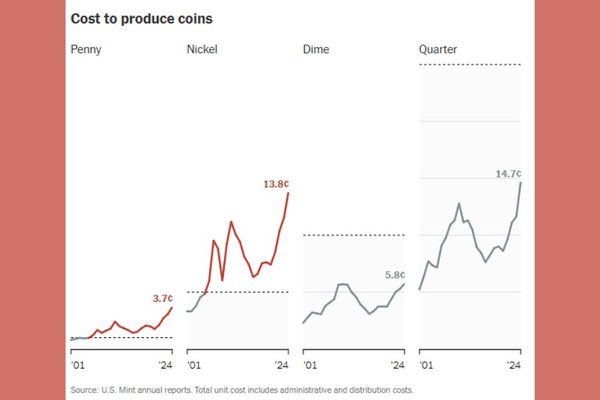
If you eliminated both the penny and the nickel, that could work but then you’d only really have two coins in wide circulation—dimes and quarters … and based on inflation both of those are likely to be money losers within the next 10 years too. So maybe we should just stop using coins or move more quickly to digital currency, but even that requires a societal change that typically takes generations to happen.
So what should we do here? In response to President Trump declaring the US would stop producing pennies, The NY Times laid out all the options presented above and ultimately came to this conclusion—”studies have estimated that over $100 billion of income goes unreported each year because of cash transactions, amounting to tens of billions in lost tax revenue. If eliminating coins led to even a modest decrease in untraceable transactions, the effects could be far greater than the profits or losses of the U.S. Mint.”
Related Posts
Book Rohit To Speak
Want to bring these ideas to your next event?
Rohit turns the thinking behind posts like this one into keynotes for audiences around the world, from Fortune 500 leadership teams to global industry conferences.
Learn More About Speaking
How It All Started
A Short Backstory Of This Blog
This is a blog about non-obvious ideas. Originally launched on the Typepad platform in 2005 as the Influential Marketing blog, the stories at first focused mainly on digital marketing while Rohit worked at Ogilvy Advertising. In 2015 Rohit officially rebranded to the Non-Obvious Insights Blog and published his WSJ bestseller Non-Obvious. For the past twenty one years, this blog has coined new terms, introduced future marketing practices and inspired the next generation of non-obvious thinkers and marketers.