








SEPTEMBER 13, 2005|RETAIL & ECOMMERCE
The New Gap.com Focuses Between Browsing and Buying
The unending focus on converting "browsers to buyers" has become a mantra for retail ecommerce sites driving an increasingly formulaic approach to interface design. Select a type of product, filter by brand, price, or size, select the one you think you want, and add it to your cart. Unfortunately, this negates the more frequent task of honing in on what you think you want, seeing a description and then going back to the original narrowed down list to see another product. Well designed sites, like www.homedepot.com, and www.ebay.com make it easy to get back to the list that you were on previously -- recognizing the user's reliance on the back button and making the task of going back easier.
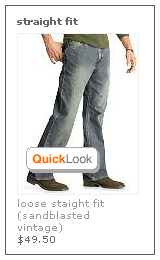 But what if you eliminated the need for the back button by focusing on the activity between browsing and buying? The point where users need more information, but are also likely to need to return to their original list quickly. The newly released version of Gap.com seems to have an answer that is winning the site redesign all kinds of admiration from the press. Their "Quick Look" feature lets users hone in on a product, see photos, what sizes are in stock (very important) and order, all without leaving the main screen. While this nifty interface does raise some question marks in terms of accessability for users with more limited systems, the arguable defense is that people with very old machines are unlikely to be shopping for clothes online anyway. For those who are, Gap.com's interface could very well represent the leap of simplicity that others will have to duplicate in order to maintain online etailing string of recordbreaking holiday season sales.
Book Rohit To Speak
Want to bring these ideas to your next event?
Rohit turns the thinking behind posts like this one into keynotes for audiences around the world, from Fortune 500 leadership teams to global industry conferences.
Learn More About Speaking
How It All Started
A Short Backstory Of This Blog
This is a blog about non-obvious ideas. Originally launched on the Typepad platform in 2005 as the Influential Marketing blog, the stories at first focused mainly on digital marketing while Rohit worked at Ogilvy Advertising. In 2015 Rohit officially rebranded to the Non-Obvious Insights Blog and published his WSJ bestseller Non-Obvious. For the past twenty one years, this blog has coined new terms, introduced future marketing practices and inspired the next generation of non-obvious thinkers and marketers.