







JULY 3, 2024|ARTIFICIAL INTELLIGENCE
Want To Understand How AI Could Transform Our World? Read More Philosophy.
AI-induced angst seems to be on everyone’s mind. Just this week I was invited to an hour-long virtual session with a group of brand experts and strategists about the future of AI and creative industries. I was tempted to do what most others do and focus on the latest technology. Whether it’s fun but relatively pointless talking head animations or mind-blowing examples of one-button Hollywood level animation, the simultaneous cheering and fearing of AI usually centers on talking about the tools. Recently I am finding far more value in turning to the work of philosophers and cultural critics who are thinking more deeply and less reactively about an AI adjacent future.
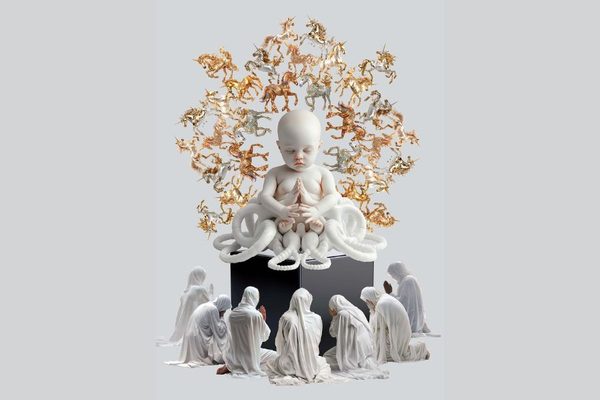
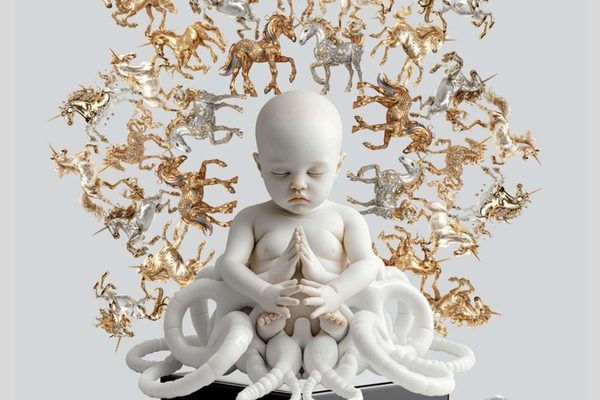
The above image, showing what AI is capable of in the hands of an artist, was made by designer Marian Bantjes using Midjourney, a platform that generates images based on text prompts. The composition, made up of twenty images selected from hundreds created over several sessions, depicts AI (symbolized by an otherworldly baby) being worshipped and promising impossible things.
For example, in the most recent edition of Walrus magazine, cultural observer Navneet Alang writes “we are awash with digital detritus, with the cacophony of the present, and in response, we seek out a superhuman assistant to draw out what is true from the morass of the false and the misleading—often only to be misled ourselves when AI gets it wrong.”
He references the writing of philosopher Nick Bostrum whose latest book, Deep Utopia (Ideapress, 2024), takes an unusual look at what will be most important in a world “solved” by technology. Bostrum and Alang offer a counterbalance to the daily overblown announcements of “groundbreaking” tech we’re surrounded by. They, and other philosophers and cultural observers like them, are the ones who offer the perspective we so desperately seek right now. So, the next time you’re looking for insight into what the future might look like, you might consider skipping the AI daily briefings and instead take time to read something that will actually make you think … and maybe offer you that glimmer of optimism about the future you’re really hoping for.
Rohit speaks on this topic. See his AI keynote.
Book Rohit To Speak
Want to bring these ideas to your next event?
Rohit turns the thinking behind posts like this one into keynotes for audiences around the world, from Fortune 500 leadership teams to global industry conferences.
Learn More About Speaking
How It All Started
A Short Backstory Of This Blog
This is a blog about non-obvious ideas. Originally launched on the Typepad platform in 2005 as the Influential Marketing blog, the stories at first focused mainly on digital marketing while Rohit worked at Ogilvy Advertising. In 2015 Rohit officially rebranded to the Non-Obvious Insights Blog and published his WSJ bestseller Non-Obvious. For the past twenty one years, this blog has coined new terms, introduced future marketing practices and inspired the next generation of non-obvious thinkers and marketers.