








JANUARY 12, 2022|SPORTS & OLYMPICS
What The Wildest Game In NFL History Can Teach Us About Trust
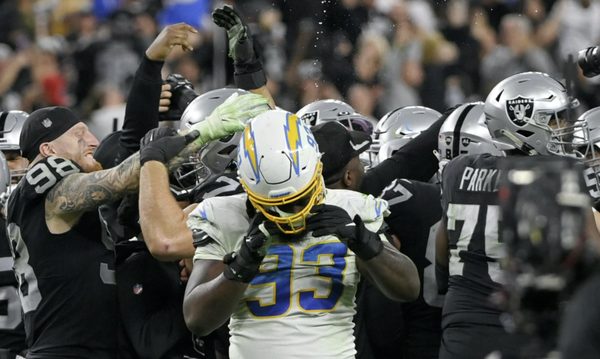
Something special happened in the NFL. The story was relatively simple - the Raiders and Chargers were set to play, with the winner making it to the playoffs and the loser going home. If the game ended with an unlikely tie, however, BOTH teams would get into the playoffs. So the speculation started. If the game was close, would both coaches play for a tie to guarantee advancing to the next stage? This conundrum was an example of what social scientists have long described as the "prisoner's dilemma."
Here's how one article summarized the prisoner's dilemma: "Two people are arrested for a crime both committed and placed in separate rooms. If neither of the two cooperate with police, a lack of evidence will set them free. If one flips on the other, the snitch will be set free and the other will go to jail. If both flip on each other, both go to jail for shorter terms."
Of course, regulation time ended with the teams tied ... which forced a single 10 minute overtime period, where both teams also scored 3 points, thus keeping the score tied. With four minutes left, would the team with the ball continue to try and score, or basically sit on the ball and run out the clock? What happened next is worth reading in this recap article (spoiler alert - the Raiders won the game). What's most interesting about the story, though, is that all signs after the game point to the fascinating conclusion that the Raider's choice to go for the win might actually have been caused by a decision by the Chargers coach to take an ill-advised timeout near the end of the game ... which indicated to the Raiders coach that the Chargers were not playing for a tie, and made the choice for the Raiders to go for the win easy.
In other words, the Chargers act of aggression (the timeout) signaled that they could not be trusted to maintain the status quo (the tie) which caused the decision by the Raiders to go for the win instead. On the field, as in life, when you offer a signal that you cannot be trusted, you can expect others to act accordingly.
Book Rohit To Speak
Want to bring these ideas to your next event?
Rohit turns the thinking behind posts like this one into keynotes for audiences around the world, from Fortune 500 leadership teams to global industry conferences.
Learn More About Speaking
How It All Started
A Short Backstory Of This Blog
This is a blog about non-obvious ideas. Originally launched on the Typepad platform in 2005 as the Influential Marketing blog, the stories at first focused mainly on digital marketing while Rohit worked at Ogilvy Advertising. In 2015 Rohit officially rebranded to the Non-Obvious Insights Blog and published his WSJ bestseller Non-Obvious. For the past twenty one years, this blog has coined new terms, introduced future marketing practices and inspired the next generation of non-obvious thinkers and marketers.