








JULY 2, 2013|BRANDS & MARKETING
Why Great Brands Don't Have Obvious Answers

 What problem are you solving?
It's one of the most basic and fundamental questions in business ... and one that most brands believe they need to be able to answer. The best ideas solve problems, right? There is a problem with this logic. Ideas that make money or change the world don't just solve problems. They offer unexpected solutions.
For example, healthy food often does not taste as good as unhealthy food. The obvious solution is to try and make healthy food that tastes better. In poor societies around the world, children are often forced to work instead of going to school because their families need the money. The obvious solution is to create some type of financial incentive for parents to continue to allow their children to go to school. The world is filled with obvious problems that seem to require obvious solutions.
Great brands are not obvious. Great solutions are not either.
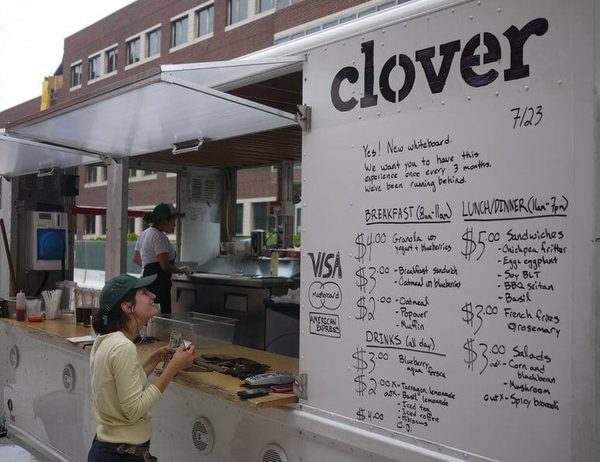
Clover Food Lab is a food truck near the MIT campus in Boston. It's operation is so efficient, that are able to serve between six and ten customers a minute and make a meal in three and a half minutes. That's nearly as fast as McDonald's. But instead of serving burgers and fries, Clover Food Lab has an all vegetarian menu filled with local and organic ingredients. Their solution is not really to make healthy food taste better - though their customers do love the food. Clover Food Lab's solution is to make healthy food faster.
Akshaya Patra is an award winning charity that works with schools in 9 states across India. Every day, the nonprofit organization prepares fresh hot lunches and feeds more than 1.3 million students in 19 locations across India. The problem they are solving is keeping kids in school - but instead of financial incentives, their incentive is based on a simple truth. If kids get a meal at school (which sometimes may be their only meal of the day), then parents are far more likely to insist that their kids attend school every day. Akshaya Patra's solution is to make food the incentive to attend school.
What do a food truck in Boston and a nonprofit in India have in common? Each solves a problem, but does it in a nonobvious way. As a result, they are each creating a unique success story. The lesson in their approaches is clear. We live in a world filled with problems. Spotting them is easy. Trying obvious solutions can be easy too - but often those don't work. They have already been tried and failed.
If you're going to solve a problem, think beyond the obvious solutions. Sometimes the only way to really solve a problem is to create a solution that is more original than your competition.
What problem are you solving?
It's one of the most basic and fundamental questions in business ... and one that most brands believe they need to be able to answer. The best ideas solve problems, right? There is a problem with this logic. Ideas that make money or change the world don't just solve problems. They offer unexpected solutions.
For example, healthy food often does not taste as good as unhealthy food. The obvious solution is to try and make healthy food that tastes better. In poor societies around the world, children are often forced to work instead of going to school because their families need the money. The obvious solution is to create some type of financial incentive for parents to continue to allow their children to go to school. The world is filled with obvious problems that seem to require obvious solutions.
Great brands are not obvious. Great solutions are not either.
Clover Food Lab is a food truck near the MIT campus in Boston. It's operation is so efficient, that are able to serve between six and ten customers a minute and make a meal in three and a half minutes. That's nearly as fast as McDonald's. But instead of serving burgers and fries, Clover Food Lab has an all vegetarian menu filled with local and organic ingredients. Their solution is not really to make healthy food taste better - though their customers do love the food. Clover Food Lab's solution is to make healthy food faster.
Akshaya Patra is an award winning charity that works with schools in 9 states across India. Every day, the nonprofit organization prepares fresh hot lunches and feeds more than 1.3 million students in 19 locations across India. The problem they are solving is keeping kids in school - but instead of financial incentives, their incentive is based on a simple truth. If kids get a meal at school (which sometimes may be their only meal of the day), then parents are far more likely to insist that their kids attend school every day. Akshaya Patra's solution is to make food the incentive to attend school.
What do a food truck in Boston and a nonprofit in India have in common? Each solves a problem, but does it in a nonobvious way. As a result, they are each creating a unique success story. The lesson in their approaches is clear. We live in a world filled with problems. Spotting them is easy. Trying obvious solutions can be easy too - but often those don't work. They have already been tried and failed.
If you're going to solve a problem, think beyond the obvious solutions. Sometimes the only way to really solve a problem is to create a solution that is more original than your competition.Rohit speaks on this topic. See his marketing keynote.
Related Posts
Book Rohit To Speak
Want to bring these ideas to your next event?
Rohit turns the thinking behind posts like this one into keynotes for audiences around the world, from Fortune 500 leadership teams to global industry conferences.
Learn More About Speaking
How It All Started
A Short Backstory Of This Blog
This is a blog about non-obvious ideas. Originally launched on the Typepad platform in 2005 as the Influential Marketing blog, the stories at first focused mainly on digital marketing while Rohit worked at Ogilvy Advertising. In 2015 Rohit officially rebranded to the Non-Obvious Insights Blog and published his WSJ bestseller Non-Obvious. For the past twenty one years, this blog has coined new terms, introduced future marketing practices and inspired the next generation of non-obvious thinkers and marketers.