






DECEMBER 6, 2010|NON-PROFITS & ADVOCACY
Why The "Digital Death" Campaign Failed Despite Celebrity Support
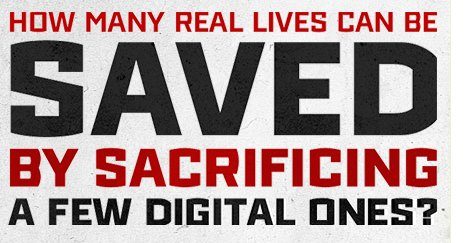 Last week on December 1st to support World AIDS Day, a small group of celebrities with millions of fans led by Alicia Keyes decided to sacrifice their digital lives to try and save real ones. The campaign, cleverly called "Digital Death" was supported by posters, online ads and a well branded microsite. The premise was simple: a group of celebrities forego using Twitter or Facebook until $1,000,000 in donations are raised for their cause. Anyone involved with the idea might have guessed that this would last for a day or two before the target was met. It has been five days and the donations still haven't even hit $300,000.
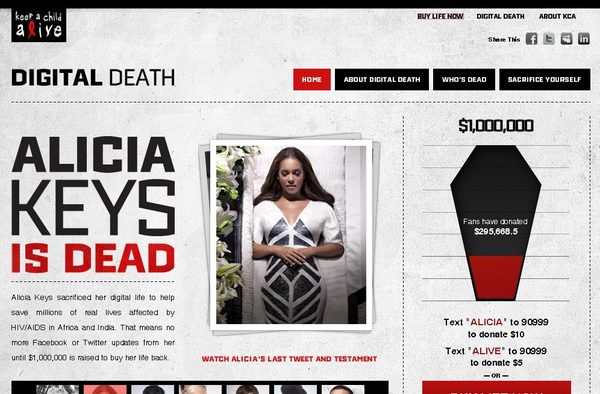
This idea isn't bad. The celebrity support is top notch. And the branding is really strong. So why did a campaign like this which has all the individual pieces it should need for success fall flat? Here are a few reasons:
-
 Inherently egotistical idea. The premise of this entire campaign was built on what is a fairly egotistical idea: that fans care so much about the tweets of their favourite celebrities that they would be willing to donate money to a cause in order to get them back. For core fans - this premise likely holds true ... but there are likely many fans of the celebrities who just don't care THAT much.
 - Asking for too much. When I first saw this campaign last week, they had a minimum donation of $10. Immediately that struck me as a huge strategic mistake. Currently it has been reduced to $1, but this choice likely cost them many supporters who might have given a buck or two at the beginning of the campaign when the buzz was highest, but would never give $10. Even the American Red Cross raising money after the Haiti earthquake had a minimum of $5. The initial minimum of $10 was a big hurdle, and even though they corrected it - it likely was too late.
- Unclear connection to cause. The campaign was understandable for what the celebrities were doing, but the connection between stopping the use (or overuse) of social media and helping keep kids fighting AIDS alive was a very thin one. The best campaigns are ones where the themes work together, and in this case they didn't.
- Going against cultural trends. There is a big cultural trend today towards feeling overloaded. People are bombarded with marketing messages, tweets, updates, followers and friends. Most of us just want a bit more simplicity, so when a group of relatively prolific celebrity Twitter users decide to "go dark" - more than a few fans likely breathed a sigh of relief. For those folks, paying to bring back the noise would be like writing a check to someone to punch you in the nose. The money might go to a great cause, but I still like my nose too much for that.
How could this campaign have worked and still made a big impact? One core thing I would have changed is to use the power of all these celebrities Twitter accounts for something more than silence. What if they all chose to spend 24 or 48 hours ONLY tweeting about Keep A Child Alive? Or how about donating some of their own money for everyone who asks them to stop their digital death?
This campaign had a chance to be something great - but now the only thing left for us to see is how the celebrities participating will come "back to life" online and quietly leave this behind them.
Update 12/6/10 4:06pm - Usher breaks his "digital death" pledge prematurely.
Update #2 12/6/10 9:02pm - Looks like the campaign miraculously went viral and raised over $700k in less than 24 hours so they are now at over $1 million raised. Either that or some of the celebs put up some cash to get their own digital lives back.
Book Rohit To Speak
Want to bring these ideas to your next event?
Rohit turns the thinking behind posts like this one into keynotes for audiences around the world, from Fortune 500 leadership teams to global industry conferences.
Learn More About Speaking
How It All Started
A Short Backstory Of This Blog
This is a blog about non-obvious ideas. Originally launched on the Typepad platform in 2005 as the Influential Marketing blog, the stories at first focused mainly on digital marketing while Rohit worked at Ogilvy Advertising. In 2015 Rohit officially rebranded to the Non-Obvious Insights Blog and published his WSJ bestseller Non-Obvious. For the past twenty one years, this blog has coined new terms, introduced future marketing practices and inspired the next generation of non-obvious thinkers and marketers.