








OCTOBER 24, 2022|ENVIRONMENT + SUSTAINABILITY
Climate Protesters Are Pouring Soup On Irreplaceable Art. And It's Working.
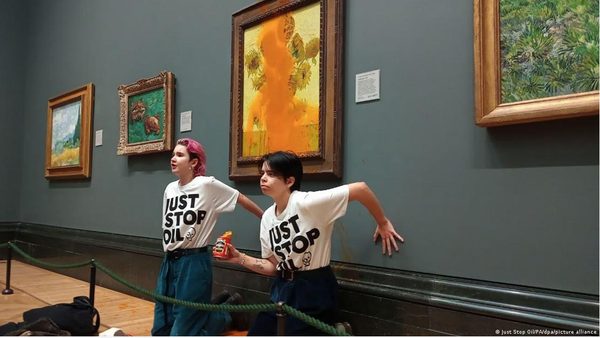
You may have come across the story of climate protesters pouring a can of tomato soup on the priceless Van Gogh painting "Sunflowers" at the National Gallery of London. Or another group that threw mashed potatoes on a Monet painting in Germany. In both cases, the paintings targeted were behind protective glass and therefore unlikely to have been permanently damaged. Alistair Walsh argues in a piece for DW that these protests, though distasteful, undeniably seem to be cutting through the spectacle and working. Which raises an obvious question: should we as a culture accept that these types of stunts will continue and may even be necessary to modernize activism and get people to pay attention?
It's hard to condone this type of cultural violence as a good thing. And there are clearly examples of vandalism that goes too far. Yet as Walsh writes, "there is a poetic beauty in the protesters' choices. They are simulating an attack on irreplaceable works of art, just as humanity is vandalizing our irreplaceable planet. You may disagree with the climate protesters' tactics, but they have succeeded in leaving their mark."
Rohit speaks on this topic. See his futurist keynote.
Related Posts
Book Rohit To Speak
Want to bring these ideas to your next event?
Rohit turns the thinking behind posts like this one into keynotes for audiences around the world, from Fortune 500 leadership teams to global industry conferences.
Learn More About Speaking
How It All Started
A Short Backstory Of This Blog
This is a blog about non-obvious ideas. Originally launched on the Typepad platform in 2005 as the Influential Marketing blog, the stories at first focused mainly on digital marketing while Rohit worked at Ogilvy Advertising. In 2015 Rohit officially rebranded to the Non-Obvious Insights Blog and published his WSJ bestseller Non-Obvious. For the past twenty one years, this blog has coined new terms, introduced future marketing practices and inspired the next generation of non-obvious thinkers and marketers.