








FEBRUARY 26, 2013|BRANDS & MARKETING
The Script Of Improv - What Is (And Isn't) Real Time Marketing

The Real Time Marketing Challenge
Yet when it comes to real time marketing, we are tempted to lump it all together. Yesterday Jay Baer over at Convince and Convert published a great recap of 17 examples of brands that got real time marketing wrong at the Oscars. Almost the same time, Steve Hall published another post about 10 brands who did real time marketing well. Both lists featured some of the same brands. So who actually got "real time marketing" right? That's a bit like trying to argue about whether scripted theater or improv is better ... the answer is neither - because it depends on the experience you want. Looking at the Oscars and how brands like Charmin or Kellogg's tried to tap into the zeitgiest of the moment - there were essentially two strategies that brands used (whether they realized it or not):Strategy #1 - Brand-Driven Real Time
Summary: Share content about what happened through a minimal brand lens/filter. How It Works: This strategy was a relatively safe approach brands could take by doing things like congratulating winners ("big congrats to Lincoln!"), asking simple non-specific questions ("what was your favourite film?), portraying vague excitement overall ("we can't wait for the red carpet!"), or (unfortunately) inserting a veiled product pitch ("if you love watching the red carpet, you will love our new RED mobile phone!"). Who It Works For: The approach is ideal for brands who want to minimize their risk, limit the autonomy of their content creators, adhere to a stricter approval matrix or ensure brand relevance during a big event or important moment in time.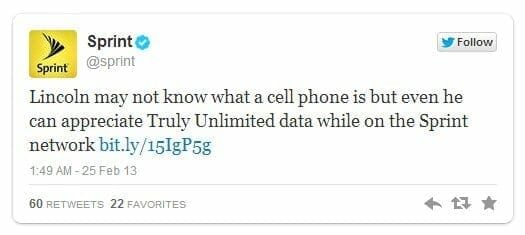 The Downside: In most cases, the brands who used this approach experienced very limited sharing. Branding real time without a strong point of view or something unique makes it very hard to create great content that people will share actively. In addition, injecting product offers or other such promotional content into the stream of live events can actually backfire to create a risk that you demonstrate how out of touch your brand actually is by trying to sell at the wrong moment.
Strategy #2 - Personality-Driven Real Time
Summary: Comment on what happened with a brand personality that offers a real point of view.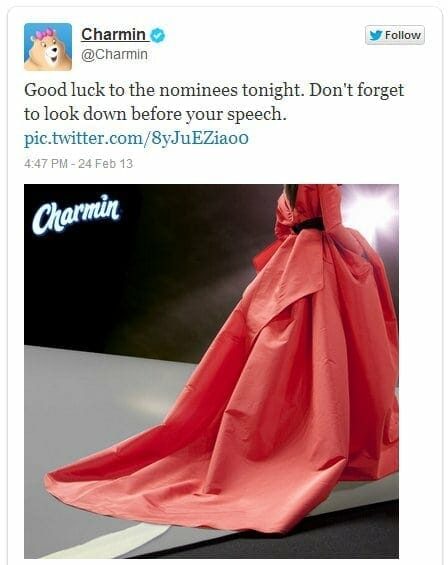 How It Works: This strategy goes further than simply reporting on what is happening by offering a point of view that injects brand personality into the comment. Great examples of this usually include reacting to something unexpected ("Oreo's at the Super Bowl"), sharing a unique or funny image ("watch out for toilet paper on your shoe"), or sharing a specific point of view that is "on brand" and more clearly relevant ("doesn't [insert attractive actress] look great in her [insert our brand here] dress? We spent hours helping her pick it!")
Who It Works For: Brands who already have a strong brand personality and social presence are ideally suited to use this approach. In addition, they need to have a high level of confidence in their content creation team, and have processes in place that offer the right amount of guidance, while still giving their creation team autonomy to create and post content in real time on behalf of the brand.
The Downside: Sometimes the high level of faith in the content creation team can be misplaced and lead to negative results. Also, a focus on real time content creation can lead teams to underestimate the value and possibilities for content that might be better off created beforehand and ready to post more rapidly with minimal modification.
How It Works: This strategy goes further than simply reporting on what is happening by offering a point of view that injects brand personality into the comment. Great examples of this usually include reacting to something unexpected ("Oreo's at the Super Bowl"), sharing a unique or funny image ("watch out for toilet paper on your shoe"), or sharing a specific point of view that is "on brand" and more clearly relevant ("doesn't [insert attractive actress] look great in her [insert our brand here] dress? We spent hours helping her pick it!")
Who It Works For: Brands who already have a strong brand personality and social presence are ideally suited to use this approach. In addition, they need to have a high level of confidence in their content creation team, and have processes in place that offer the right amount of guidance, while still giving their creation team autonomy to create and post content in real time on behalf of the brand.
The Downside: Sometimes the high level of faith in the content creation team can be misplaced and lead to negative results. Also, a focus on real time content creation can lead teams to underestimate the value and possibilities for content that might be better off created beforehand and ready to post more rapidly with minimal modification.
The Bottom Line
Neither of these options is inherently better - but the second is often more easily shareable (a key success metric). Ultimately, the question is - are you trying to use real time marketing as the social media equivalent of scratching "we were here" onto the wooden table? If so, the first option works perfectly well. When it comes to offering real time content that people can't help sharing ... there is no substitute for doing everything with a real personality. Otherwise you might end up with what I joking compared in a comment on Jay's post to "the social media equivalent of a clip-on tie" - high in convenience, but ultimately sending the wrong message. Top Photo Credit: Chicago City LimitsRohit speaks on this topic. See his marketing keynote.
Related Posts
Book Rohit To Speak
Want to bring these ideas to your next event?
Rohit turns the thinking behind posts like this one into keynotes for audiences around the world, from Fortune 500 leadership teams to global industry conferences.
Learn More About Speaking
How It All Started
A Short Backstory Of This Blog
This is a blog about non-obvious ideas. Originally launched on the Typepad platform in 2005 as the Influential Marketing blog, the stories at first focused mainly on digital marketing while Rohit worked at Ogilvy Advertising. In 2015 Rohit officially rebranded to the Non-Obvious Insights Blog and published his WSJ bestseller Non-Obvious. For the past twenty one years, this blog has coined new terms, introduced future marketing practices and inspired the next generation of non-obvious thinkers and marketers.