








MAY 26, 2010|ADVERTISING
Verizon Asks: Are We Really Friends With Our Friends?
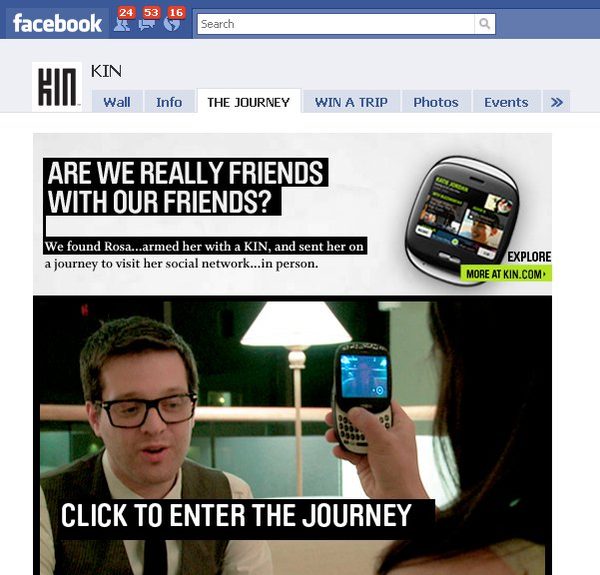 An often quoted stat about the new reality we lives in today points out that 20 years ago the average American had less than 25 friends. Today the average American has more than 200. Of course, we all realize on some level that this blossoming of friendship doesn't equate to having 200 best friends. In fact, the ties we have to the outer fringes of our social network may be very thin indeed. That's the subject that an interesting campaign launched by Verizon is trying to explore.
 Rather than trying to get you to "defriend" the people you don't think you know, the campaign asks a much more interesting question. If you had the chance to meet your online friends in real life, would you learn they were really your friends, or little more than strangers? To find out, the company found a girl named Rosa and decided to send her on a journey across the US to connect with her online friends in real life. They armed her with a KIN, a new phone which seems to be either made by Verizon, Sharp or Windows (they don't really say) and recorded video of her travels.
It's a marketing campaign that fits squarely in between the concept of a documentary and a social experiment, but it works because you want to know what Rosa will discover. Not only for her, but because it has some meaning for each of us who keep these virtual relationships and wonder what they really mean. It's not that often that a marketing effort can turn the lens back onto a cultural phenomenon that we are all living through right now. This succeeds brilliantly at that and is worth watching.
From a marketing point of view, however, the campaign equally brilliantly demonstrates how a lack of connection can make life confusing for a consumer. Details like the KIN Studio or the KIN Spot are features that sound important, but are shared on Facebook without any real explanation of what they are or why someone should care. Ultimately the Facebook page relies on product imagery and placement to make you aware of the product and make you want one.
The connection to how the phone might actually help you better filter your network or find out who your real friends are (both things the campaign focuses on) are missing to connect the phone to the bigger message they are sharing. What this leads to is that the campaign may stay in people's mind for the questions it raised and the story it focused on telling, but the phone (and company behind it) will be easily forgotten - like a subtle product placement in a TV series that you might notice, but never really makes much of a difference.
Related Posts
Book Rohit To Speak
Want to bring these ideas to your next event?
Rohit turns the thinking behind posts like this one into keynotes for audiences around the world, from Fortune 500 leadership teams to global industry conferences.
Learn More About Speaking
How It All Started
A Short Backstory Of This Blog
This is a blog about non-obvious ideas. Originally launched on the Typepad platform in 2005 as the Influential Marketing blog, the stories at first focused mainly on digital marketing while Rohit worked at Ogilvy Advertising. In 2015 Rohit officially rebranded to the Non-Obvious Insights Blog and published his WSJ bestseller Non-Obvious. For the past twenty one years, this blog has coined new terms, introduced future marketing practices and inspired the next generation of non-obvious thinkers and marketers.