







JANUARY 31, 2024|DATA & ANALYTICS
How To Put Numbers in Context During an Election Year
I have bad news for all of us. The non-stop media coverage of politics has already started and it's an election year here in the US. Now that the voting for Presidential primaries has started, you'll likely start seeing a lot of reports about momentum, winners, losers and general predictions about the sentiment of the nation based on biased polling.
To help us all get ready, I thought it might be useful to share a few facts about demographics in America that put commonly shared numbers into context for what they actually mean. Here are a few:
- As of 2022, about 160 million Americans are registered to vote (about 50% of the population). Of those registered, recent historical data suggests that about 66% will actually turn out. This means a subset of about 100 million Americans decide who wins elections.
- Presidential primaries are notorious for only indicating preferences of the most engaged voters. The recent Republican primaries in Iowa, for example, had an 18% turnout of eligible Republicans - a total of just 110,298 voters. This is about the same number of people who fit in a large college football stadium and mathematically less than one in five people.
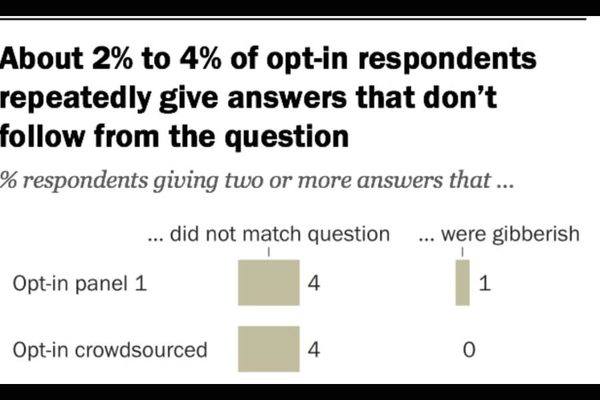
- Polls abound during an election year and claim to offer some insight into how large groups of people are thinking or feeling - but time after time they are shown to only measure micro-opinions of small groups or just plain wrong, leading multiple studies to conclude they are unreliable tools to understand anything.
So where does this leave any of us who are seeing this constant stream of media that will likely turn into a flood the closer we get to November and election day? For me, I'll maintain a healthy skepticism about numbers, do my best to ignore any and all polls and instead try to focus on what the people running for office actually say (rather than the commentary and soundbites around what they supposedly meant). It's going to take some work but if I'm going to vote based on any kind of knowledge, that's what it seems like it will take.
Related Posts
Book Rohit To Speak
Want to bring these ideas to your next event?
Rohit turns the thinking behind posts like this one into keynotes for audiences around the world, from Fortune 500 leadership teams to global industry conferences.
Learn More About Speaking
How It All Started
A Short Backstory Of This Blog
This is a blog about non-obvious ideas. Originally launched on the Typepad platform in 2005 as the Influential Marketing blog, the stories at first focused mainly on digital marketing while Rohit worked at Ogilvy Advertising. In 2015 Rohit officially rebranded to the Non-Obvious Insights Blog and published his WSJ bestseller Non-Obvious. For the past twenty one years, this blog has coined new terms, introduced future marketing practices and inspired the next generation of non-obvious thinkers and marketers.